
Attached policy document

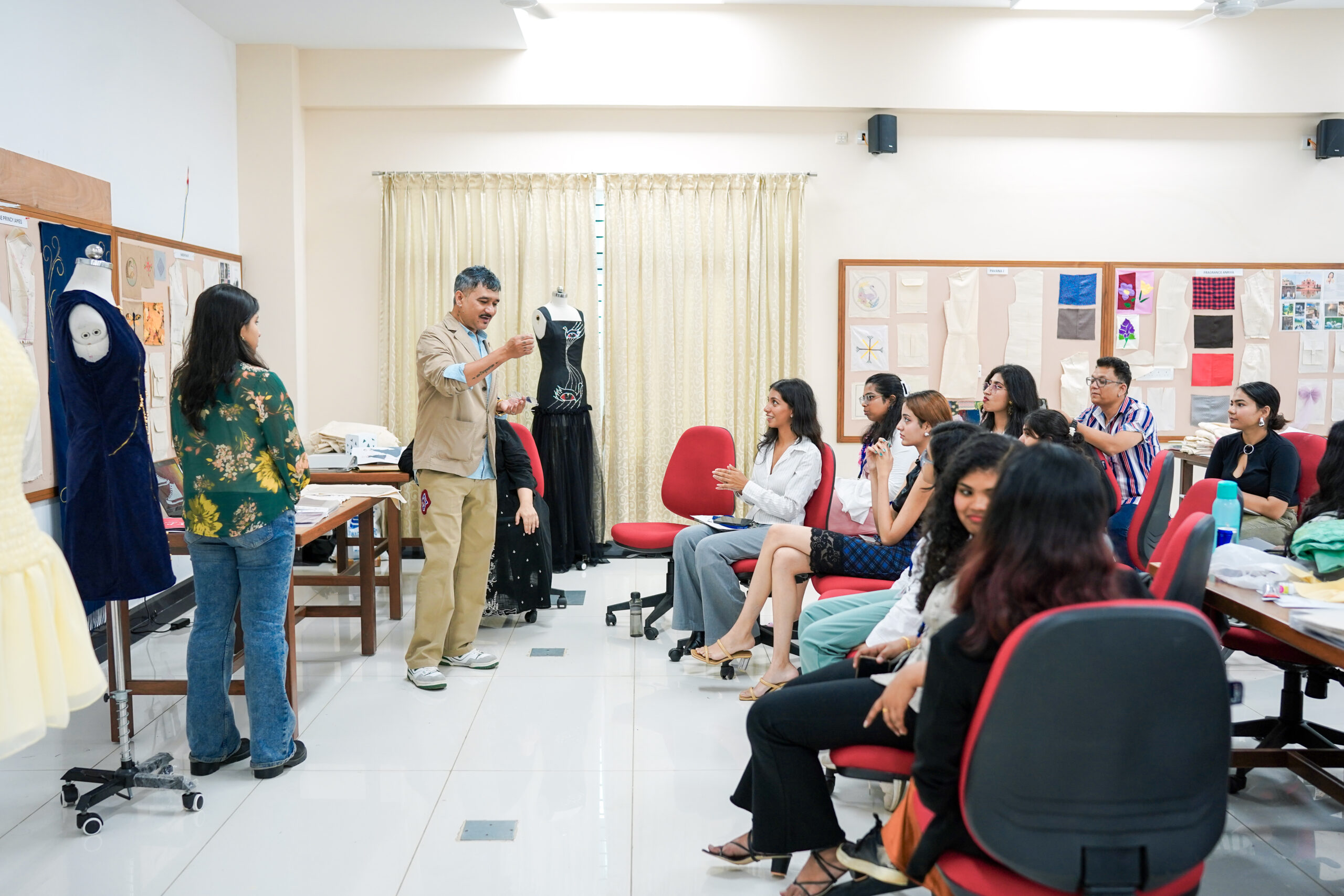
The Ph.D. in Transdisciplinary Design at Alliance University is built around the need to address the complexities of current and future challenges that cannot be solved by a single discipline. The program brings together theory and practice from multiple disciplines to develop innovative design-led solutions for a rapidly changing society. Students engage in both theoretical and applied research and learn to integrate data, technology, and design to address social, economic, political, and environmental challenges.
The program prepares future leaders to bridge the natural sciences, humanities and social sciences, alongside design practices, using creative and research-driven approaches to create meaningful and lasting impact.

Why Choose
Ph. D. - Transdisciplinary Design
at Alliance University?
Ph. D. - Transdisciplinary Design
at Alliance University?
Lorem Ipsum is simply dummy
Critical Thinking
The ability to analyze and synthesize information from multiple sources and perspectives.
Creative Problem-Solving
Skills in developing innovative solutions that address complex, multifaceted problems.
Collaboration and Communication
Proficiency in working with diverse teams and effectively communicating ideas across disciplines.
Research Expertise
Advanced knowledge of research methods and the ability to conduct rigorous, integrative research.
Leadership
The capacity to lead transdisciplinary projects and initiatives, fostering collaboration and driving change.
‹ PREV
NEXT ›
Areas of Research
The program prepares researchers to address today’s design challenges by combining theory and practice. Students learn to use design not just to analyze problems, but to create real change. The program supports flexible career paths in design, research, policy, strategy, and emerging technologies. Scholars work closely with communities, creative practitioners, industry, government, and academics. Through this collaboration, they develop new approaches that promote equity, justice, and sustainability, while learning beyond traditional disciplinary boundaries.
Students may pursue either applied or theoretical research.
PEO (Program Educational Objectives)
PSO (Program Specific Outcomes)
PO (Program Outcomes)
Activity Points
• Applicants holding a master’s degree with a minimum 55% marks or equivalent Grade in a point scale as may be prescribed by the UGC from time to time, wherever the grading system is followed.
• Applicants whose results of the final examination of a program leading to a master’s degree are awaited can be given provisional admission if he/she fulfils other requirements for admission. After the provisional admission, the candidate will be required to furnish proof of completing a master’s degree with a minimum of 55% marks within three months from admission, failing which his / her admission will be cancelled.
• Applicants holding foreign Degree’s equivalent to that of a Master’s degree study with minimum 55% marks or equivalent Grade in a point scale as may be prescribed by the UGC from time to time, wherever grading system is followed; Provided that applicants with a foreign Degrees shall be admitted to the Ph.D. programme, subject to clearance by the Equivalence Committee of Alliance University.
• Applicants having completed M.Phil. Coursework with a minimum 55% marks in aggregate or its equivalent Grade, in the UGC point scale, and those candidates who have their M.Phil. Dissertation evaluated, but viva-voce is pending, maybe may also be admitted to the Ph.D. programme.
• Applicants possessing a degree approved as equivalent to the M.Phil. Degree in India, obtained from a foreign Educational Institution accredited by the UGC, if candidates with a degree from a foreign Institution shall be admitted to the Ph.D. programme, subject to the clearance by the Equivalence Committee of Alliance University.
• Admission of candidates belonging to the SC/ST/OBC, or other reserved categories shall be governed by the Karnataka State Rules in this regard, from time to time.
• Students from a four-year undergraduate programme (with Honors) can enroll directly if they have scored 75% or above, with a 5% relaxation for specified categories as per UGC regulations. Those who have scored between 55% and 75% may qualify after completing either a one-year mastes programme or a bridging course of 36-40 credits. (Refer to National Credit Framework NCrF 2024).
• For students from a three-year undergraduate programme, Ph.D. eligibility requires the completion of a bridging programme of 36-40 credits along with the necessary coursework. (Refer to National Credit Framework NCrF 2024).
Program duration
| Entry Level | Program Duration |
|---|---|
| Entry Level | 3–6 years (full-time) |
| Particulars | Indian Nationals | Foreign Nationals |
|---|---|---|
| Registration Fee | ₹50,000 | $600 |
| program Fee (Per Annum) | ₹1,00,000 | $1,400 |
| Comprehensive Exam Fee | ₹20,000 | |
| Thesis Submission Fee | ₹30,000 | |
| Doctoral Scroll Free | ₹5,000 | |
| Convocation Fee | ₹3,000 | |
| Alumni Association Fee | ₹3,000 |
| Category | Eligibility / Scope | Grant Amount / Benefits |
|---|---|---|
| Research Fellowship | Full-time scholars | ₹35,000 per month |
| Contingency Grant | Full-time scholars | ₹25,000 per year |
| International Conference Funding | Case-by-case basis; once during the program | Up to ₹1,00,000 |
| National Workshop Funding | Scholars not receiving other funding support | ₹30,000 per year |
| Inclusion & Special Provisions | Women scholars and differently-abled scholars | Special provisions and relaxations; access to Centres of Excellence and entrepreneurial fund of ₹10 Crores |
| Policy | Conditions | Awards and funding are subject to review by the Scholarship / Research Committee; limited availability on a first-come-first-served basis |
| Steps | Description |
|---|---|
| Step 1 | Submit online application |
| Step 2 | Pay Application Fee — ₹3,000 |
| Step 3 | Alliance Research Aptitude Test (ARAT) |
| Step 4 | Personal Interview |
| Step 5 | Evaluation of research synopsis on proposed dissertation |
| Step 6 | Consideration of scholastic record, work experience, and extracurricular achievements; final selection based on overall performance |
Living Spaces That Inspire Belonging
EXPLORE OUR HOSTELS
Comfort, safety, and community form the foundation of campus living. Our residential halls are thoughtfully designed to create a sense of belonging—offering a welcoming environment where students can study, unwind, and build lifelong friendships.

Separate hostels
for boys and girls
Student-friendly
common areas
Spacious rooms
(single, double, or triple occupancy)
Dedicated wardens
and support teams

Real Stories, Real Impact
STUDENT
Everything You Need to Know
What advanced tools or methodologies, like design thinking, are emphasized in Alliance University’s Ph. D. in Transdisciplinary Design?
Alliance University’s Ph. D. in Transdisciplinary Design emphasises design thinking as a core methodology, alongside research that engages with advanced tools such as AR and VR, emerging digital environments including the Metaverse, and AI-integrated design processes.
What is the stipend for Alliance University Ph. D. scholars?
Full-time Ph. D. scholars at Alliance University are eligible for a research fellowship of ?35,000 per month, along with an annual contingency grant of ?25,000.
What is the Ph. D. in Transdisciplinary Design at Alliance University, and why is it a game-changer for innovative thinkers?
Rooted in Bengaluru’s vibrant design and innovation ecosystem, the Ph. D. in Transdisciplinary Design encourages scholars to connect research with practice and teaching, preparing them to create meaningful impact across social, cultural, and technological contexts.
What interdisciplinary research areas, like AI or sustainable design, can I explore in Alliance University’s Ph. D. in Transdisciplinary Design?
The Ph. D. in Transdisciplinary Design at Alliance University allows scholars to explore research areas such as sustainability, urban planning and design, healthcare innovation, humanizing technology, and social innovation.
Who is eligible to apply for this program?
Applicants with a postgraduate degree with at least 55%, or a four-year undergraduate honours degree with 75% or above, from a recognised university are eligible. The selection process comprises the Alliance Research Aptitude Test (ARAT), submission of a research synopsis, and a personal interview.
What skills will I gain through a Ph. D. in Transdisciplinary Design?
Scholars develop advanced skills in creative problem-solving, critical and systems thinking, research-led innovation, and entrepreneurial decision-making. The program also strengthens proficiency in applying emerging design tools, including AI-enabled methods and AR and VR technologies.
How long is Ph. D. in design?
The Ph. D. in Transdisciplinary Design at Alliance University is a full-time doctoral program with a duration ranging from three to six years.
Is there a Ph. D. for Design?
Yes. Alliance University offers a Ph. D. in Transdisciplinary Design. The program focuses on interdisciplinary research, combining design, technology, and social innovation to address real-world challenges.
Can a Ph. D. be interdisciplinary?
Yes. Alliance University’s Ph. D. in Transdisciplinary Design integrates multiple fields with real-world stakeholders and contexts, encouraging scholars to develop holistic solutions that address social, technological, and cultural challenges.
Is Alliance University’s Ph. D. in Transdisciplinary Design ideal for tackling global challenges like climate change or urbanization?
Yes. The program includes research areas such as Sustainability and Urban Planning and Design, emphasizing solutions to real-world challenges. Alliance University’s approach encourages research that addresses issues at local, national, and global levels, making it well-suited for tackling complex problems like climate change and urbanization.
Course Framework
| Course | Credits | Assessment Pattern |
|---|---|---|
| Design Research Methodology | 4 | Internal Assessment |
| Research Publication & Ethics | 2 | DSA + Semester End Exam |
| Academic Writing | 1 | Workshop + Coursera Certificate |
| Learning & Development | 1 | Coursera Certificate |
| Seminar | — | Internal Assessment |
| Directed Courses | 6 | Internal Assessment |
| Total Credit | 14 | — |
Program Outcomes
- Research Competence & Knowledge Creation:
Demonstrate proficiency in applying advanced research methodologies, analytical techniques, and experimental designs to produce quality research. - Research Ethics & Integrity:
Uphold ethical research practices, ensuring compliance with academic integrity, plagiarism standards, and responsible data management. - Effective Communication & Knowledge Dissemination:
Demonstrate proficiency in academic writing, presentation, and public discourse. - Societal Impact:
Align research with societal needs and Sustainable Development Goals (SDGs), contributing to policy, industry, and community-driven advancements. - Lifelong Learning & Continuous Professional Development:
Commit to continuous learning and professional growth by staying updated with emerging trends, theories, and best practices in the field.
Program / Research Highlights
- Practitioner-scholars embody relational leadership and practice-based research methodologies
- Research approaches draw from natural sciences, social sciences, and humanities
- Integration of rigorous analysis with creative problem-solving
- Encouragement of interdisciplinary and transdisciplinary collaboration across diverse sectors
- Engagement with complex, real-world projects through transdisciplinary pathways
- Faculty with extensive experience integrating methods, theories, and tools from diverse disciplines
- Strong network of academic departments, industrial partners, and NGOs enabling transdisciplinary design research
- Emphasis on exploration beyond disciplinary boundaries
- Recognition of creative, practice-based research as a key mode of knowledge creation
- Focus on engaged scholarship that transcends domain-specific silos
- Program grounded in the interconnectedness of environmental and social challenges, cultural diversity, and biological diversity
- Monthly fellowship of ₹35,000 plus applicable benefits for full-time scholars, along with seed funding and incubation support
- Ph.D. awarded upon successful completion of coursework, qualifying examination, and original research and/or design outcome creation
Areas of Research
The program prepares researchers to address today’s design challenges by combining theory and practice. Students learn to use design not just to analyze problems, but to create real change. The program supports flexible career paths in design, research, policy, strategy, and emerging technologies. Scholars work closely with communities, creative practitioners, industry, government, and academics. Through this collaboration, they develop new approaches that promote equity, justice, and sustainability, while learning beyond traditional disciplinary boundaries.
Students may pursue either applied or theoretical research.
- Applied Research
Applied research focuses on creating new knowledge and innovation through hands-on practice and analysis.
Design Outcome: Scholars who successfully develop a research-based design outcome that addresses important contemporary design challenges may be awarded a Ph.D.
Mentorship and Support: Scholars may receive guidance from entrepreneurs and investors, with possible seed funding for prototyping and incubation.
Requirements: Scholars must complete coursework, pass the qualifying examination, and submit a thesis alongside a design outcome that makes a significant contribution to the field. - Theoretical Research
Theoretical research focuses on improving understanding of design practice and generating knowledge with real-world relevance.
Research Output: A Ph.D. may be awarded based on the originality and quality of research, even without creating a design outcome.
Publications: Strong research is demonstrated through 2–3 Scopus-indexed publications.
Requirements: Scholars must complete coursework, pass the qualifying examination, and submit a thesis that makes a significant contribution to the field. - Coursework
The program welcomes students from diverse academic and professional backgrounds, including engineering, sciences, humanities, social sciences, fine arts, design, cinema, management, or public policy, to name a few. It helps students learn how to frame and solve complex research problems using design and systems thinking across disciplines.
Students propose their research topics at the time of admission and finalize them when the program begins, in alignment with faculty expertise. The coursework builds strong research skills, encourages curiosity, critical thinking, and supports the development of new methods and ideas appropriate for transdisciplinary research to address contemporary ‘wicked’ problems.
The curriculum combines research with action-oriented learning to address real-world challenges such as climate change and social development. Students learn advanced transdisciplinary design processes and work collaboratively to question existing approaches and propose meaningful alternatives. - Learning Outcomes
After completing coursework, students will be able to:- Define research problems and solutions within a transdisciplinary framework
- Effectively apply design thinking into domain specific challenges
- Apply systems thinking effectively in transdisciplinary research
- Develop new knowledge, methods, and interpretations
- Critically review design literature from multiple disciplines
- Plan and carry out research across the social sciences
- Question established assumptions using design approaches
- Use design methods creatively in research and practice
- Thrust Areas
The Faculty of Liberal Arts and Sciences focuses on two key research thrust areas aligned with the University’s vision:- Transdisciplinary Studies
This area brings together ideas and methods from multiple disciplines to address complex social challenges, with a focus on sustainability and development.
Core Design Themes:- Systems thinking for complex problems
- Participatory and co-creative design
- Context-aware and scalable solutions
- Ethical design practice
Sub-Areas: - Design, Society & Culture: Equity, culture, critical theory, and ethics of technology
- Design & Future Studies: Future thinking, human–technology relationships, and responsible innovation
- Design & Sustainability: Circular systems, climate resilience, sustainable materials, and just transitions
- Design Management: Strategic design, collaboration, impact measurement, and adaptive processes
- Indian Knowledge Systems (IKS)
This thrust area draws on India’s long-standing knowledge traditions in philosophy, science, arts, and culture, integrating them with contemporary design education and research.
Core Design Themes:- Balancing tradition and modern innovation
- Decolonizing design education
- Ethical use of technology alongside craftsmanship
Sub-Areas: - Arts, Crafts & Aesthetics: Documentation, revival, material innovation, and artisan engagement
- Indian Ethnocentric Design: Indigenous design frameworks, integration with modern science, and culturally rooted design education
- Transdisciplinary Studies

For
Admissions