
The Industry Certifications component is a distinctive feature of the curriculum, designed to bridge the gap between academic learning and industry expectations by integrating globally recognized certifications into the academic framework. This initiative enables students to gain validated, industry-relevant skills that complement their theoretical knowledge and significantly enhance employability .
The program offers a curated portfolio of certifications from leading global organizations such as Microsoft, AWS, Google, Cisco, IBM, Oracle, Red Hat, CompTIA, and others, covering high-demand domains including Artificial Intelligence, Cloud Computing, Cybersecurity, Data Analytics, DevOps, and Software Development (as outlined in the certification index on page 4 of the document).
A unique aspect of this framework is its flexible dual-pathway model:
a) Students may pursue direct global certifications, earning recognition and the highest academic grade upon successful completion
b) Alternatively, a structured academic evaluation pathway ensures equitable assessment through internal and semester evaluations
The Industry Certifications framework emphasizes:
a) Alignment with global industry standards and emerging technologies
b) Hands-on, skill-based learning with real-world applications
c) Enhanced career readiness and competitive advantage
d) Continuous learning and professional development
By embedding certifications within the curriculum, Alliance University ensures that graduates are not only academically strong but also industry-validated professionals equipped to excel in a rapidly evolving technological landscape.


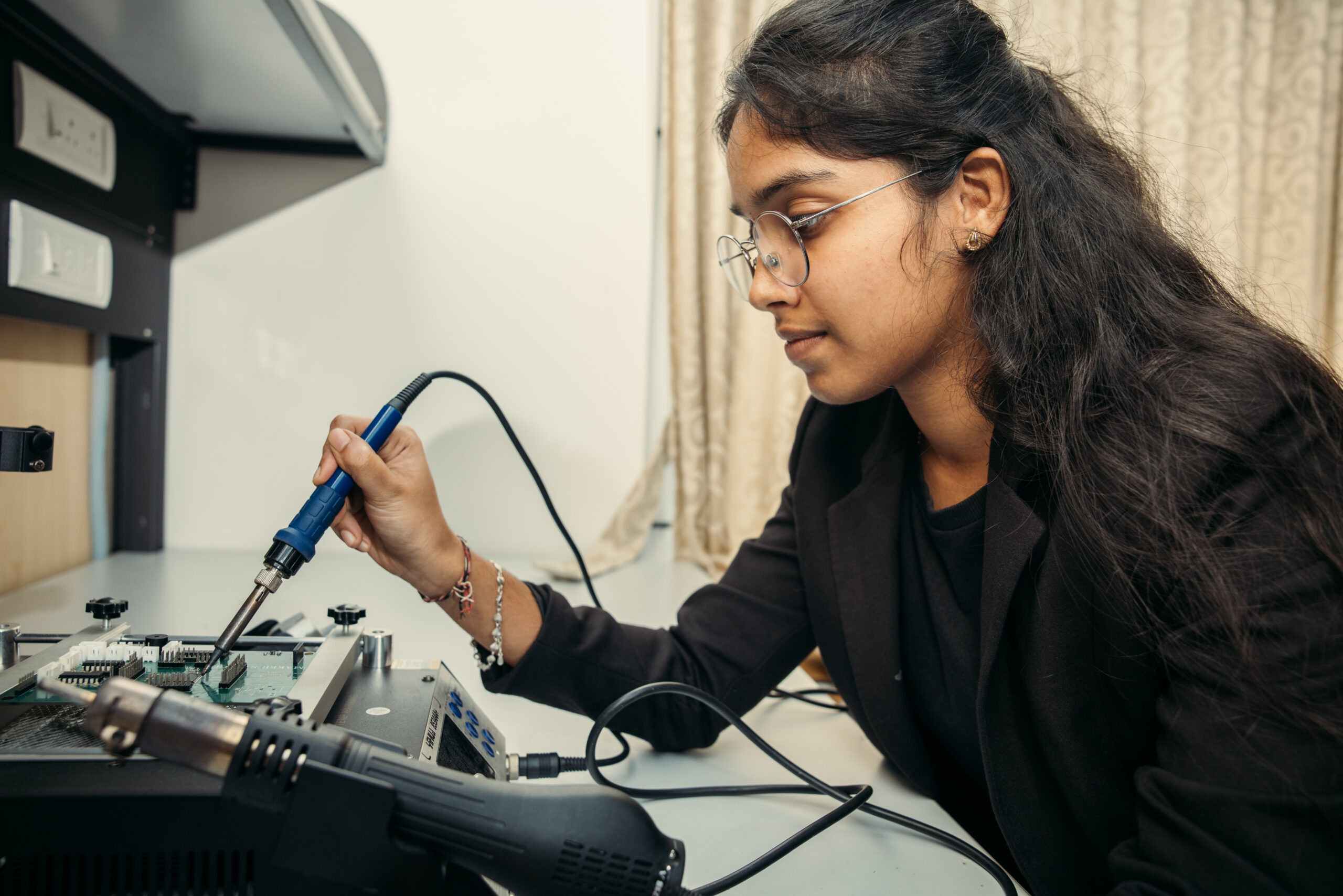
The B. Tech. in Electronics and Communication Engineering program at Alliance University prepares students for a world increasingly shaped by connected technologies, intelligent systems, and advanced communication networks. The program builds a strong foundation in electronics, communication systems, semiconductor technologies, VLSI design, embedded systems, and networking, while encouraging hands-on learning through laboratories, industry-standard tools, projects, and research-oriented training.
With growing opportunities across telecommunications, semiconductor design, IoT, embedded systems, automation, consumer electronics, and communication networks, the program equips students to design, build, and optimise technologies that connect people, systems, and industries. Graduates can explore careers in VLSI design, embedded systems, communication engineering, networking, IoT development, electronics design, and related technology domains.

Why Choose
B. Tech. ECE
at Alliance University?
B. Tech. ECE
at Alliance University?
Supporting Features
Comprehensive Academic Framework
Core subjects and specialised electives to build both theoretical and practical knowledge.
Design-Centric Experiential Learning
Experiential learning through design projects and state-of-the-art lab facilities.
Professional Industry Immersion
Internships providing industry exposure and hands-on training.
Real-World Capstone Integration
Capstone projects addressing real-world industry and societal challenges.
Innovation-Driven Research Initiatives
Research opportunities designed to foster innovation in the field.
| Course | Category |
|---|---|
| Calculus and Linear Algebra | PC-BS |
| Chemistry / Physics - I | PC-BS |
| Innovations and Inventions in Engineering | PC |
| Applied Physics / Business Communication and Logical Reasoning | PC-BS/AEC |
| Logic Building using JAVA | PC-ES |
| Biology / Universal Human Values | PC-BS/UC |
| Sustainable Development Goals | UC |
| Learning How to Learn | AEC |
| Prompt Engineering | AEC |
| Advising Seminar | AEC |
| Activity Points 1 | LBC |
| Course | Category |
|---|---|
| Advanced Calculus and Differential Equations | PC-BS |
| Chemistry / Physics - I | PC-BS |
| Design Thinking and Innovation | PC-ES |
| Applied Physics / Business Communication and Logical Reasoning | PC-BS/AEC |
| Programming in Python | PC-ES |
| 2D/3D Modelling and Prototyping | PC-ES |
| Biology / Universal Human Values | PC-BS/UC |
| Excel and Powerpoint | AEC |
| Industry 4.0 Specialization | AEC |
| Activity Points 2 | LBC |
| Course | Category |
|---|---|
| Discrete Mathematics | PC-BS |
| Data Structures | PC |
| Programming in JAVA | PC |
| Digital Principles and Computer Organization | PC |
| Open Elective L I | OEL |
| Analytical Skills | AEC |
| Verbal Ability | AEC |
| Product Design and Realization | PC-ES |
| Social Internship | UC |
| Data Analytics in Power BI | AEC |
| Influencing People | AEC |
| Activity Points 3 | SEC |
| Course | Category |
|---|---|
| Probability Theory & Statistical Inference | PC-BS |
| Design and Analysis of Algorithms | PC |
| Data Communication and Computer Networks | PC |
| Database Management System | PC |
| Minor – I | ME |
| Open Elective L II | OEL |
| Solving for Bharath | PC-BS |
| Critical Thinking | AEC |
| Successful Negotiation | AEC |
| Story Telling & Influencing | AEC |
| Activity Points 4 | SEC |
| Course | Category |
|---|---|
| Numerical Methods and Statistical Techniques | PC-BS |
| Operating Systems | PC |
| Theory of Computation | PC |
| Cryptography and Network Security | PC |
| Minor Elective – II | ME |
| Design Project – I | SEC |
| Soft Skills | AEC |
| Decision-Making: Blending Art & Science | AEC |
| Build Personal Resilience | AEC |
| Activity Points 5 | SEC |
| Course | Category |
|---|---|
| Compiler Design | PC |
| Software Engineering and Agile Development | PC |
| Object Oriented Analysis and Design | PC |
| Minor Elective – III | ME |
| Minor Elective – IV | ME |
| Industry Certification | SEC |
| Design Project – II | SEC |
| Soft Skills | AEC |
| Aptitude | AEC |
| Verbal Ability | AEC |
| Activity Points 6 | SEC |
| Course | Category |
|---|---|
| Software Testing | PC |
| Minor Elective – V | ME |
| Minor Elective – VI | ME |
| Open Elective I | OE |
| Professional Ethics | PC |
| Capstone Project – I | CP |
| Industry Internship Programme | SEC |
| Course | Category |
|---|---|
| Disaster Management | UC |
| Indian Knowledge System | UC |
| Environmental Science | UC |
| Open Elective II | OE |
| Legal Awareness and IPR | UC |
| Capstone Project – II | CP |
Course Categories:
UC : University Core || PC : Program Core || PC-BS : Program Core - Basic Sciences || PC-ES : Program Core - Engineering Sciences || OE : Open Elective || OEL : Open Elective Languages || AEC : Ability Enhancement Courses || SEC : Skill Enhancement Courses || LBC : Learning Beyond Classroom
‹ PREV
NEXT ›
University Core
The University Core is an integral component of the curriculum designed to provide students with a holistic, value-based, and interdisciplinary education beyond their core technical domain. It reflects Alliance University’s commitment to developing well-rounded graduates equipped with ethical awareness, social responsibility, and a global outlook.
The University Core emphasizes:
a) Ethical decision-making and professional responsibility
b) Sustainability and environmental consciousness
c) Cultural awareness and societal engagement
d) Legal literacy and intellectual property awareness
By integrating these dimensions, the University Core ensures that graduates are not only technically proficient but also socially conscious, ethically grounded, and globally competent professionals.
The University Core emphasizes:
a) Ethical decision-making and professional responsibility
b) Sustainability and environmental consciousness
c) Cultural awareness and societal engagement
d) Legal literacy and intellectual property awareness
By integrating these dimensions, the University Core ensures that graduates are not only technically proficient but also socially conscious, ethically grounded, and globally competent professionals.
Minors
Minor courses enable students to build focused expertise in a specialised domain that complements their Major coursework. Offered from Semester 4 onward, the Minor stream comprises five elective slots spread across Semesters 4 through 7, allowing students to progressively deepen knowledge in a chosen track. Minors are curated from the seven specialisation tracks — Embedded Systems and IoT, Next Generation Communication Systems, VLSI Design, Biomedical Engineering, Automotive Electronics, Semiconductor Technology, and Quantum Technologies — and are directly aligned to industry-relevant skill sets. Students select their Minor track at the start of Year 3, enabling coherent specialisation across electives, Design Projects, and the Capstone sequence.
Embedded System and IoT
Next Generation Communications Systems
VLSI Design
Bio Medical Engineering
Automotive Electronics
Semiconductor Technology
Quantum Technologies
Open Electives
Open Electives offer ECE students the freedom to broaden their intellectual horizons beyond the boundaries of their core programme. In the spirit of NEP 2020's multidisciplinary vision, these courses are drawn from across the university's academic portfolio, enabling students to explore adjacent domains — from consumer technology and sustainable systems to entrepreneurship and social innovation.
By choosing Open Electives, students develop cross-functional awareness and the ability to contextualise engineering solutions within broader societal, economic, and environmental frameworks. Open Electives are offered in Semesters 3, 4, and 7, ensuring that exposure to diverse disciplines is distributed meaningfully across the programme.
Consumer Electronics
Automation in Daily Life
PEO (Program Educational Objectives)
• PEO 1:
Apply core concepts of engineering to provide solutions for real-world challenges.
• PEO 2:
Exhibit techno-socio-managerial skills to work ethically and efficiently in multidisciplinary teams and diverse professional environments.
• PEO 3:
Pursue lifelong learning through higher education, research, or professional development, and contribute to societal growth through sustainable engineering practices.
PSO (Program Specific Outcomes)
• PSO1:
Integrate the hardware and software co-designs for Embedded systems and IoT applications to achieve optimal performance.
• PSO2:
Optimize Next Generation Communication Systems.
• PSO3:
Evaluate the VLSI circuits and systems, to ensure optimal performance.
PO (Program Outcomes)
On completion of the program, the students can:
• PO1: Engineering Knowledge:
Apply knowledge of mathematics, natural science, computing, engineering fundamentals and an engineering specialization as specified in WK1 to WK4 respectively to develop to the solution of complex engineering problems.
• PO2: Problem Analysis:
Identify, formulate, review research literature and analyze complex engineering problems reaching substantiated conclusions with consideration for sustainable development. (WK1 to WK4)
• PO3: Design/Development of Solutions:
Design creative solutions for complex engineering problems and design/develop systems/components/processes to meet identified needs with consideration for the public health and safety, whole-life cost, net zero carbon, culture, society and environment as required. (WK5)
• PO4: Conduct Investigations of Complex Problems:
Conduct investigations of complex engineering problems using research-based knowledge including design of experiments, modelling, analysis & interpretation of data to provide valid conclusions. (WK8)
• PO5: Engineering Tool Usage:
Create, select and apply appropriate techniques, resources and modern engineering & IT tools, including prediction and modelling recognizing their limitations to solve complex engineering problems. (WK2 and WK6)
• PO6: The Engineer and The World:
Analyze and evaluate societal and environmental aspects while solving complex engineering problems for its impact on sustainability with reference to economy, health, safety, legal framework, culture and environment. (WK1, WK5, and WK7).
• PO7: Ethics:
Apply ethical principles and commit to professional ethics, human values, diversity and inclusion; adhere to national & international laws. (WK9)
• PO8: Individual and Collaborative Team work:
Function effectively as an individual, and as a member or leader in diverse/multi-disciplinary teams.
• PO9: Communication:
Communicate effectively and inclusively within the engineering community and society at large, such as being able to comprehend and write effective reports and design documentation, make effective presentations considering cultural, language, and learning differences
• PO10: Project Management and Finance:
Apply knowledge and understanding of engineering management principles and economic decision-making and apply these to one’s own work, as a member and leader in a team, and to manage projects and in multidisciplinary environments.
• PO11: Life-Long Learning:
Recognize the need for, and have the preparation and ability for
I. independent and life-long learning
II. adaptability to new and emerging technologies and
III. critical thinking in the broadest context of technological change. (WK8)
Activity Points
The Activity Points Program is designed to encourage student involvement in co-curricular, extracurricular, and community activities beyond academics. It helps students develop valuable life skills, explore their interests, and make the most of their time at the institute. Students are required to earn a minimum of 100 Activity Points per semester from Semester 1 to Semester 6 by participating in approved activities such as clubs, cultural events, sports, and community service. Maintaining a qualifying grade in Activity Points is mandatory for the successful completion of the academic program, with a total requirement of 600 Activity Points.
Program Core
Major courses form the disciplinary core of the B.Tech in Engineering. Spread across Years 2, 3, and 4, these courses deliver the foundational and advanced knowledge that defines a competent ECE engineer — spanning circuit theory, signal processing, communication systems, digital design, microprocessors, control systems, and image processing.
Each Major course is carefully sequenced to build conceptual depth progressively: early semesters establish mathematical and circuit-level foundations, while later semesters introduce system-level design, real-time processing, and domain-specific applications. Courses are mapped to Program Outcomes (PO1–PO12) and Programme Specific Outcomes (PSOs) in alignment with NBA Tier-1 and Washington Accord standards, ensuring graduates are equipped to tackle complex engineering problems across industry and research environments.
Classroom instruction is complemented by laboratory work, MATLAB-based simulations, and design projects that reinforce theoretical concepts with hands-on practice.
Principles of Communications
- Network Theory and Transmission Lines
- Digital Logic Design with VHDL
- Analog Electronics Circuits
- Signals and Systems
- Data Communication and Networking
- EM Theory and RF Antenna
- Microprocessor and Microcontroller
- Digital Signal Processing
- Modern Control System
- Microwave and Optical Transmission Systems
- Internet of Things
- Digital Image Processing
Ability Enhancement Courses (AEC)
The Ability Enhancement Courses (AEC) are designed to equip students with essential professional, cognitive, and life skills that complement their technical education. This component focuses on developing competencies that are critical for academic success, career readiness, and personal growth in a dynamic and competitive global environment .
AECs encompass a wide range of skill-oriented modules such as communication and verbal ability, analytical and critical thinking, data interpretation, digital proficiency, industry-relevant tools, and emerging areas like prompt engineering and Industry 4.0. These courses are delivered through interactive, application-oriented learning approaches, ensuring practical skill development.
The AEC framework emphasizes:
a) Effective communication and interpersonal skills
b) Analytical reasoning and problem-solving abilities
c) Digital literacy and tool-based competencies
d) Career readiness and professional development
By integrating these capabilities into the curriculum, AECs ensure that students graduate as well-rounded professionals with strong cognitive abilities, adaptability, and the confidence to excel in diverse professional environments.
Skill Enhancement Courses (SEC)
Skill Enhancement Courses (SEC) are a critical component of the undergraduate curriculum, designed to bridge the gap between theoretical academic knowledge and the practical competencies required in the modern workforce. These courses focus on "learning by doing" and providing students with measurable, transferable skills.
Core Objectives of SEC:
The primary goal of SEC is to improve the employability of graduates by providing them with specialized training that may fall outside their main disciplinary focus. This ensures that students are not just subject-matter experts but are also digitally literate, professionally capable, and industry-ready.
Key Domains of SEC:
Undergraduate programs typically offer a diverse menu of SEC options, categorized into several high-impact areas:
Digital & Technical Proficiency: This includes courses in Data Analytics, Advanced Excel, Python programming, Digital Marketing, and AI-assisted tools. These skills are essential across all sectors, from humanities to engineering.
Communication & Soft Skills: Focuses on professional writing, public speaking, leadership, and emotional intelligence. Training often involves mock interviews and group discussions to prepare students for corporate environments.
Financal & Legal Literacy: Practical courses on Personal Finance, Investment Planning, Taxation, or Cyber Laws, ensuring students understand the regulatory and financial frameworks of their future careers.
Creative & Media Arts: Options such as Content Creation, Video Editing, Podcasting, and Graphic Design for students interested in the creative economy.
The Capstone Project represents the culmination of the B.Tech CSE program, providing students with an opportunity to integrate, apply, and demonstrate their cumulative learning in addressing real-world challenges. Spanning Semesters 7 and 8, this experience enables students to work individually or in teams, synthesizing knowledge from core, minor, and elective domains into innovative and impactful solutions.
The Capstone Project is designed to foster:
a) Advanced problem-solving and critical thinking
b) Innovation, design thinking, and research orientation
c) Collaboration, project management, and professional practices
d) Application of emerging technologies to real-world scenarios
Students are encouraged to develop deployable prototypes, scalable systems, and research-driven solutions, with outcomes that may lead to publications, patents, startups, or funded research initiatives. Emphasis is placed on industry relevance, societal impact, and technological innovation.
Serving as a portfolio-defining experience, the Capstone Project significantly enhances students’ readiness for professional careers, higher education, entrepreneurship, and research pathways, positioning them as competent and confident graduates in a competitive global landscape."
The Course of Independent Study (CIS) is a distinctive 3-credit academic pathway that offers students a valuable opportunity to engage in research-oriented learning through a faculty-mentored project in place of one course within their curriculum. Designed to nurture intellectual curiosity, innovation, and critical thinking, the course enables students to immerse themselves in hands-on research through laboratories, field-based work, or Centres of Excellence. Under close faculty guidance, students identify research problems, pursue structured inquiry, and develop meaningful academic outcomes. Credits are earned through consistent progress, active participation in review milestones, successful completion of the project, and the preparation and submission of a research paper to a Scopus-indexed journal, conference, or other approved scholarly platform—positioning students for early exposure to high-quality research and scholarly contribution.
The Design Projects (I & II) form a key experiential learning pathway within the curriculum, enabling students to progress from ideation to implementation through a structured and innovation-driven approach. Spread across successive semesters, these courses provide a comprehensive platform for students to apply theoretical knowledge to real-world and industry-relevant challenges.
Design Project I focuses on the conceptual and research-oriented phase, where students engage in problem identification, domain exploration, literature review, gap analysis, and ideation using structured frameworks. This stage emphasizes design thinking, analytical skills, and solution architecture, helping students build a strong foundation for developing meaningful solutions.
Design Project II advances into the development and validation phase, where students transform their ideas into functional prototypes and deployable systems. This includes methodology design, application development, UI/UX design, testing, validation, and performance evaluation. The process is supported through continuous mentoring, industry inputs, structured reviews, and iterative improvements, ensuring both academic rigor and practical relevance .
Together, the Design Projects emphasize:
a)Innovation, design thinking, and structured problem-solving
b)Hands-on development, prototyping, and use of modern tools
c)Collaboration, project management, and communication skills
d)Research orientation, documentation, and potential publication outcomes
By the end of this two-stage experience, students develop scalable, user-centric, and impactful solutions, positioning them strongly for the Capstone Project and equipping them with the skills required for professional practice, entrepreneurship, and research-driven careers.
Design Project I focuses on the conceptual and research-oriented phase, where students engage in problem identification, domain exploration, literature review, gap analysis, and ideation using structured frameworks. This stage emphasizes design thinking, analytical skills, and solution architecture, helping students build a strong foundation for developing meaningful solutions.
Design Project II advances into the development and validation phase, where students transform their ideas into functional prototypes and deployable systems. This includes methodology design, application development, UI/UX design, testing, validation, and performance evaluation. The process is supported through continuous mentoring, industry inputs, structured reviews, and iterative improvements, ensuring both academic rigor and practical relevance .
Together, the Design Projects emphasize:
a)Innovation, design thinking, and structured problem-solving
b)Hands-on development, prototyping, and use of modern tools
c)Collaboration, project management, and communication skills
d)Research orientation, documentation, and potential publication outcomes
By the end of this two-stage experience, students develop scalable, user-centric, and impactful solutions, positioning them strongly for the Capstone Project and equipping them with the skills required for professional practice, entrepreneurship, and research-driven careers.
The Industry Internship Programme is an integral component of the B.Tech CSE curriculum, designed to provide students with hands-on industry exposure and real-world experience in professional environments. Embedded within the academic framework, the internship enables students to apply their theoretical knowledge to practical, industry-relevant problems, thereby bridging the gap between classroom learning and workplace expectations .
Typically undertaken in the advanced stages of the program, the internship offers opportunities to work with leading organizations, startups, and research institutions across domains such as software development, data analytics, cybersecurity, cloud computing, and emerging technologies. Students engage in live projects, collaborative team environments, and problem-solving tasks, gaining insights into industry practices, tools, and workflows.
The programme emphasizes:
Application of technical knowledge in real-world scenarios
Development of professional, communication, and teamwork skills
Exposure to industry standards, tools, and best practices
Enhanced employability through experiential learning
Guided by academic and industry mentors, students are evaluated based on their performance, project outcomes, and professional conduct, ensuring a structured and meaningful learning experience. The Industry Internship Programme plays a crucial role in preparing students to transition confidently into professional careers, entrepreneurship, and industry-driven innovation.
STUDY ABROAD OPTIONS
International Mobility
Experience global education through our international study opportunities designed to broaden academic perspectives and cultural understanding. These programmes enable students to study at partner universities abroad, gain international exposure, and develop the global competencies needed to succeed in an interconnected world.
An opportunity that lets students begin their degree at Alliance University (1 or 2 years) and then transfer to a foreign university to complete and earn their degree internationally.
Explore the World: Study a semester abroad, earn transferable credits, and gain global insights while experiencing a new culture and expanding your skills.
An exciting immersion opportunity for Alliance University students to engage with leading multinational companies and innovative startups, offering a unique blend of global learning and practical work exposure abroad, all within just 7 to 14 days.
Short-term programmes lasting 2 to 4 weeks offer students an ideal opportunity to gain international exposure without disrupting their academic schedule.










Alliance University welcomes students from across the world to study, collaborate, and thrive in a truly global learning ecosystem. We combine academic rigour with industry exposure, modern infrastructure with personalised support, and global perspectives with Indian values.
Recognising Effort, Celebrating Success
01
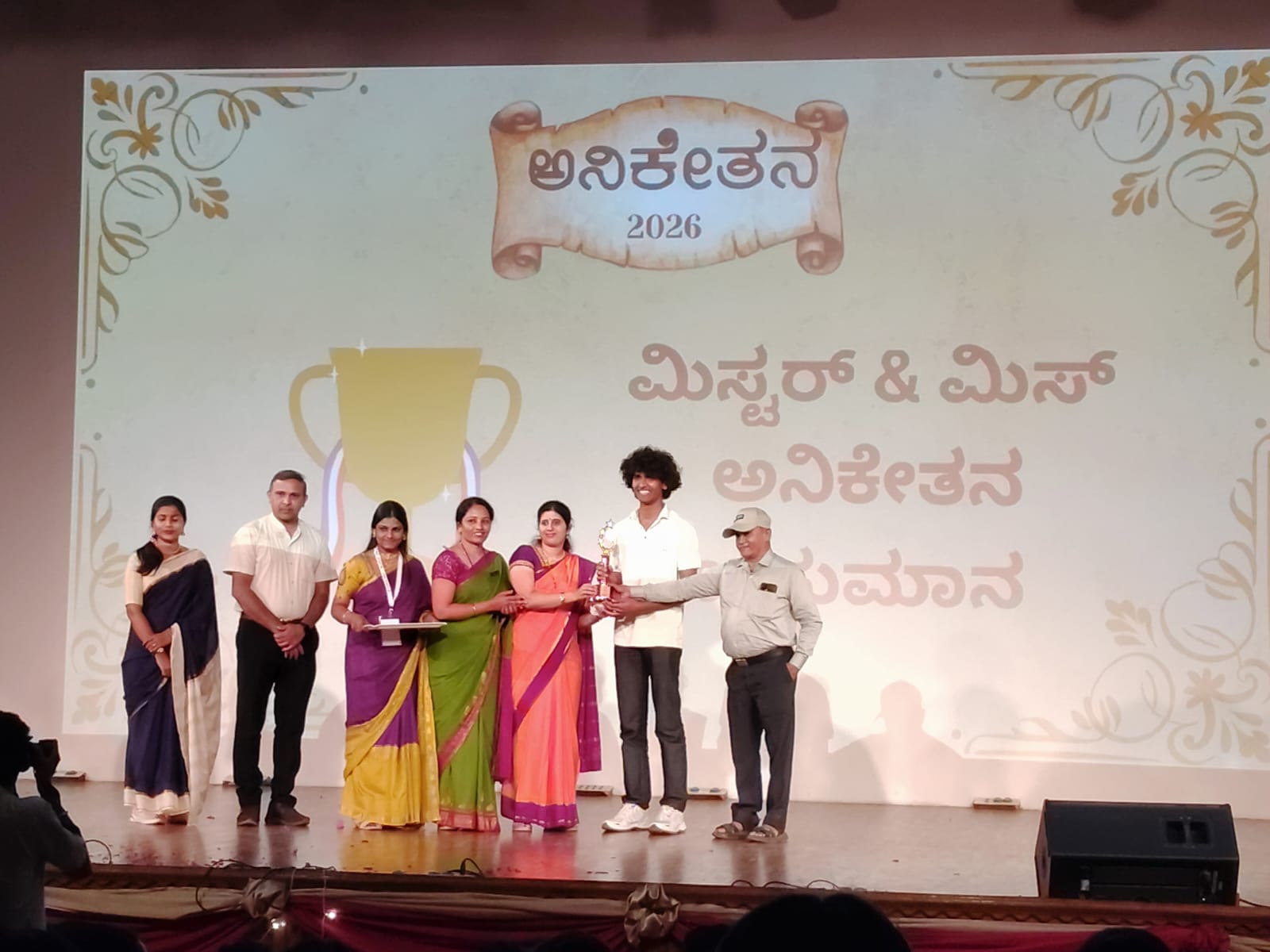
ANIKETHANA 2026_MCC
02
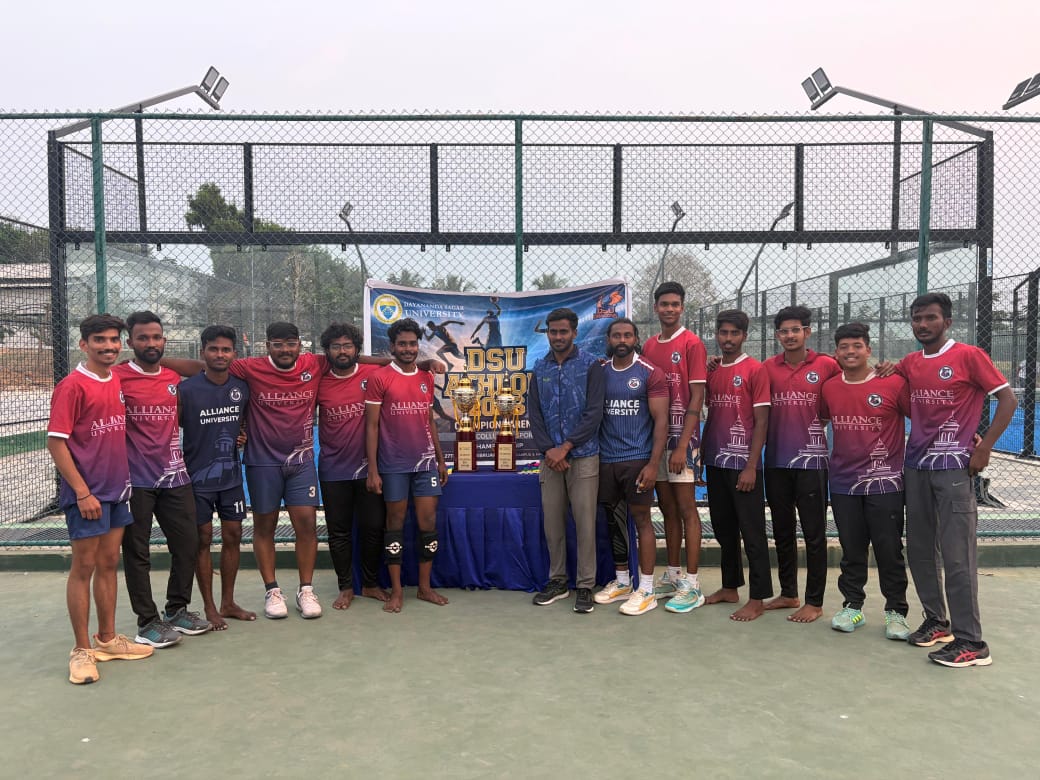
Athlon 2026 Dayanada Sagar University Volleyball
03
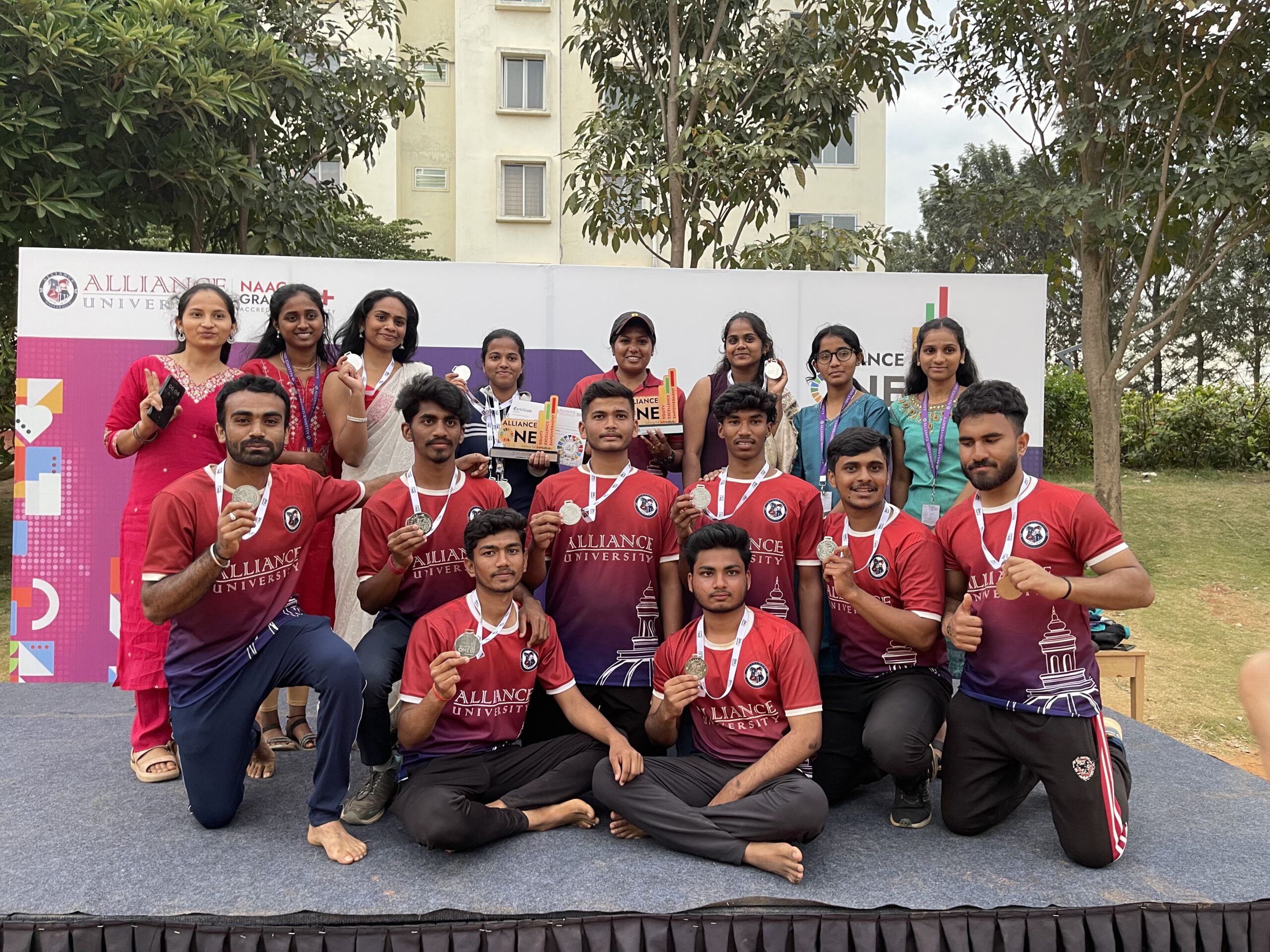
Achievement
04
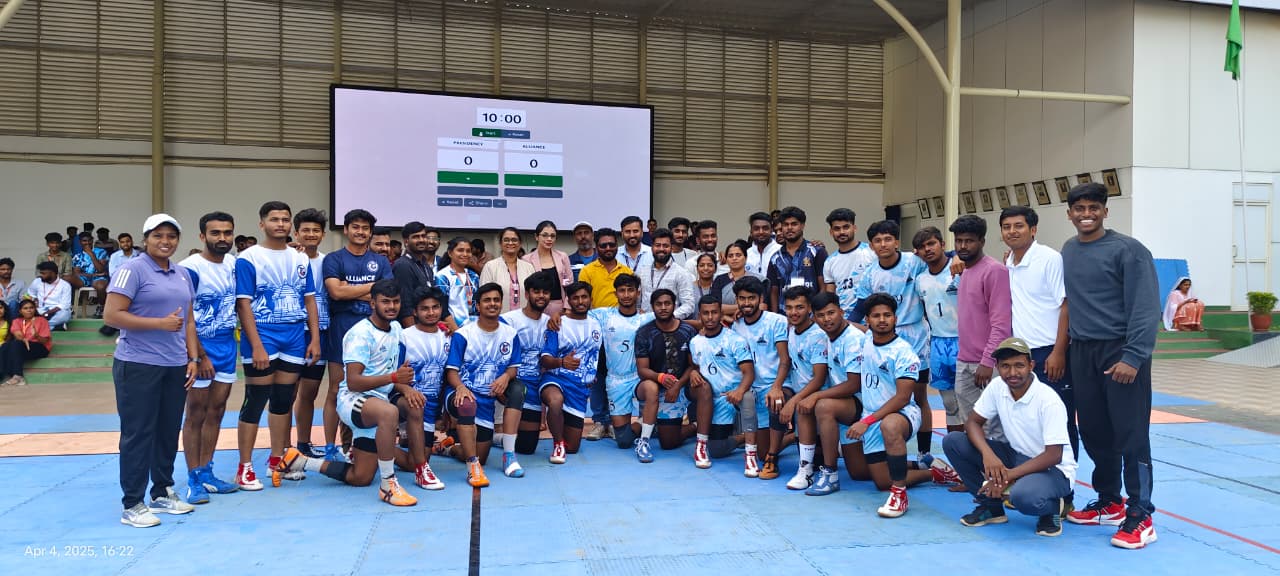
Azim Premji - Kabbadi
05
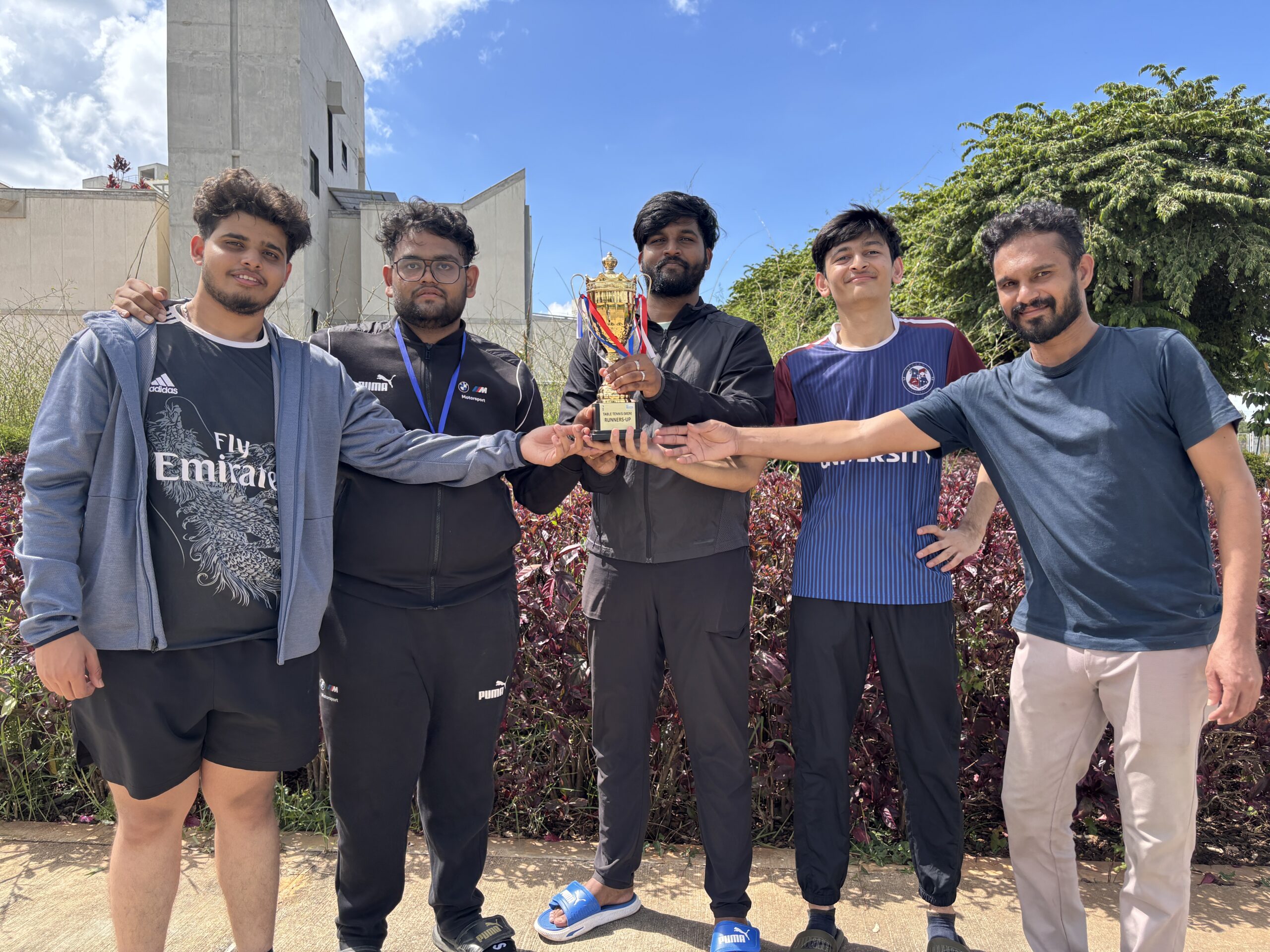
Azim Premji - Table Tennis
06
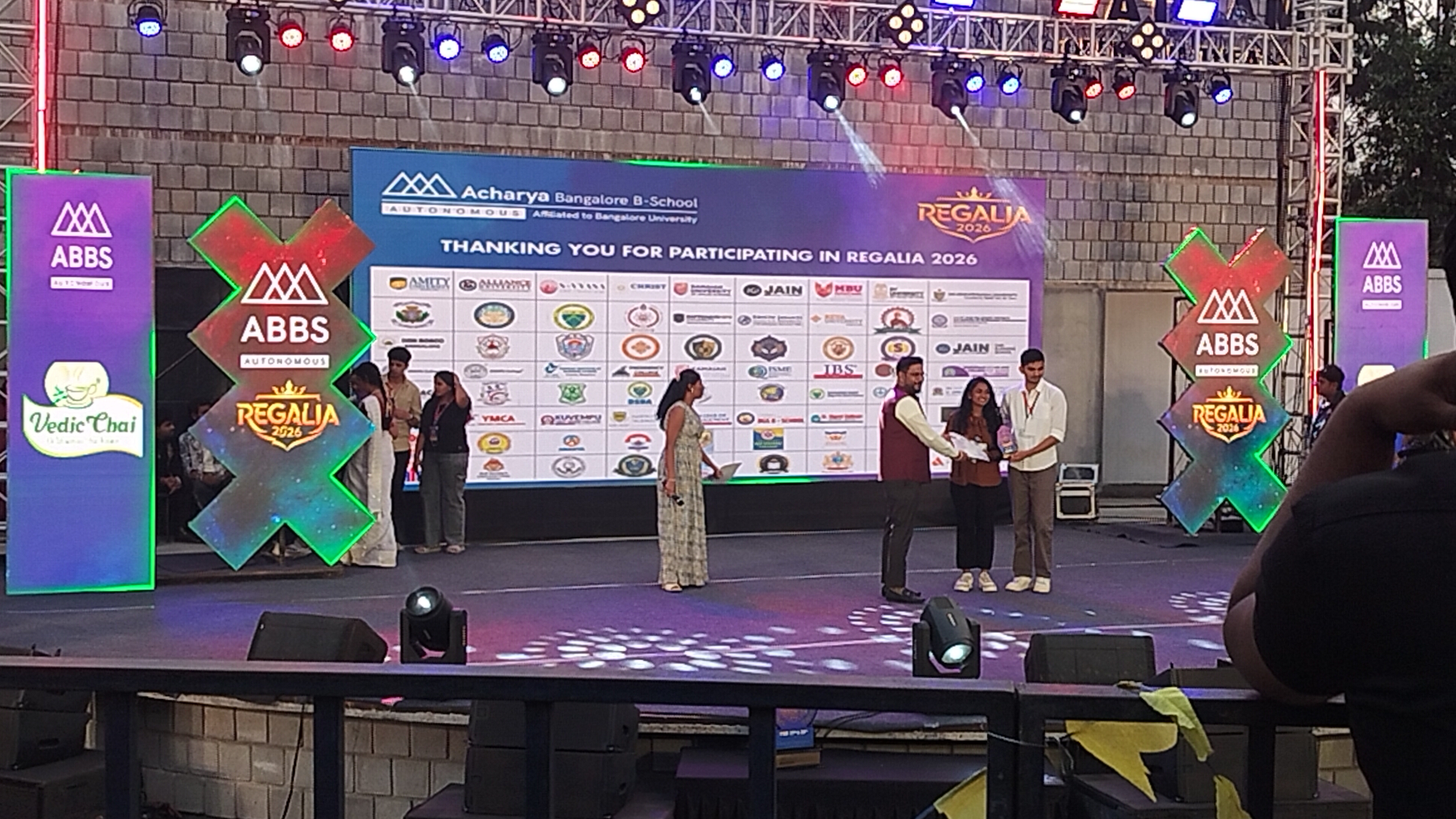
Ideathon - Regalia 2026 _Acharya College
07
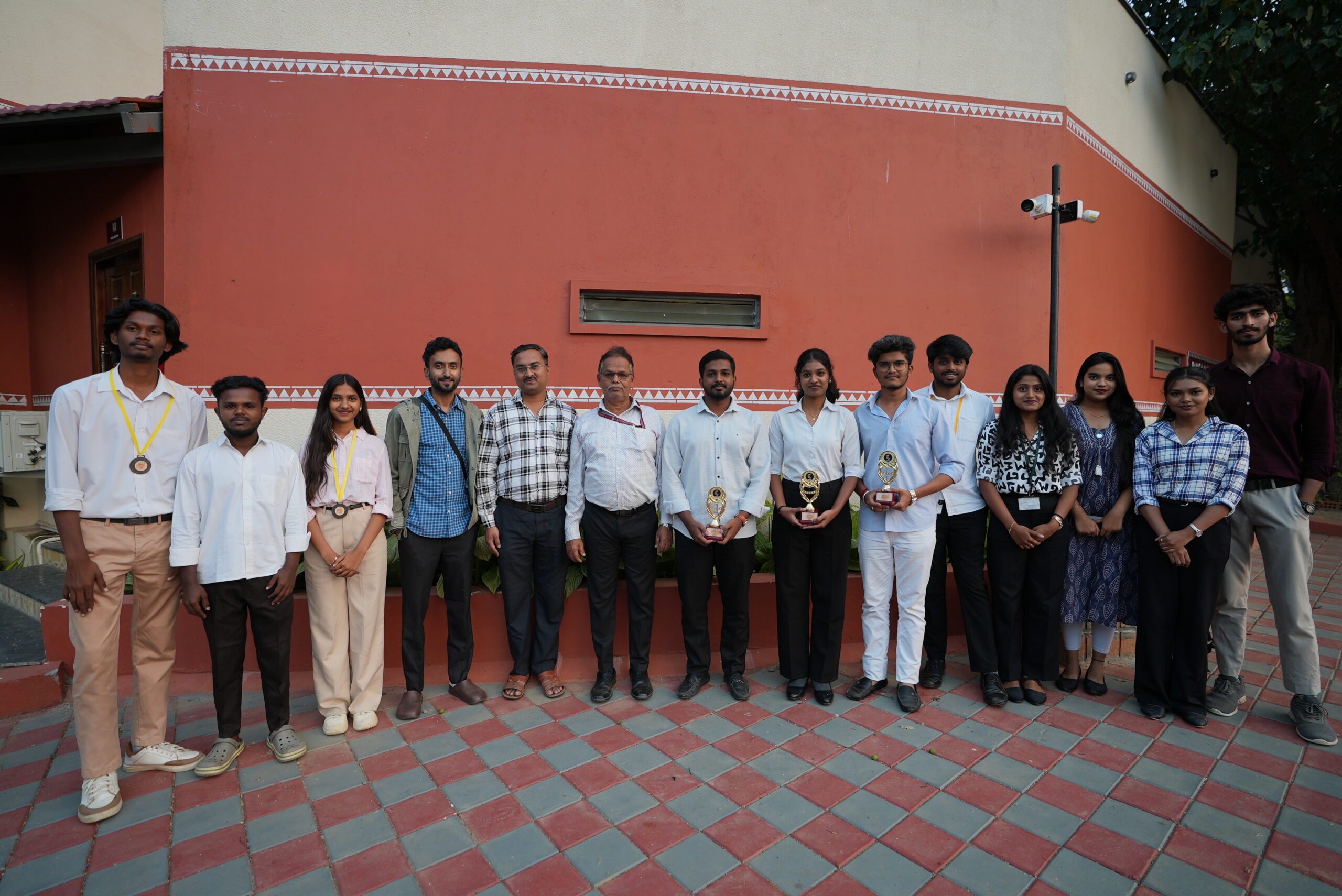
Kalarava
08
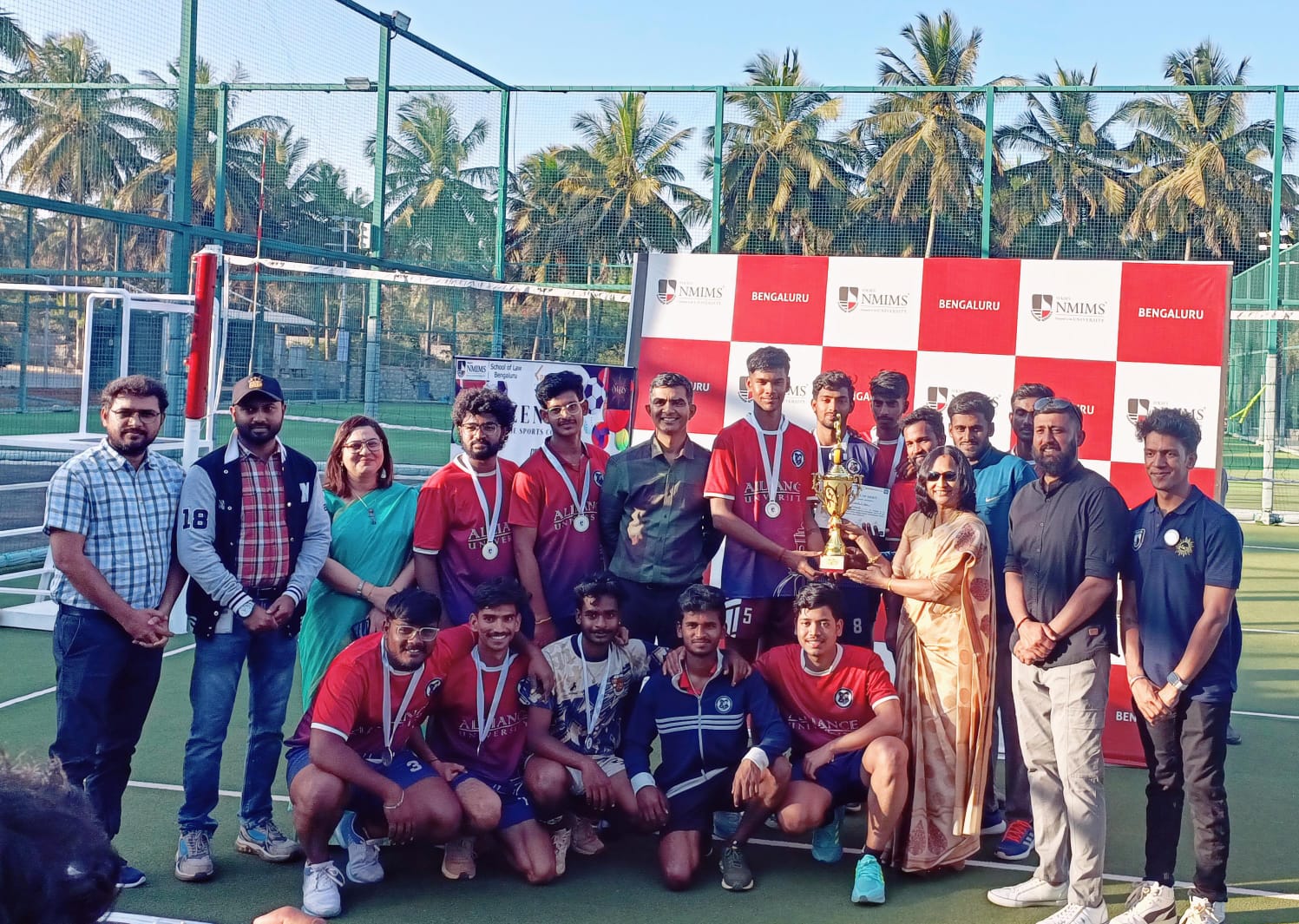
Parakram 2026 - NMIMS University_Volleyball
| Category | Eligibility Criteria |
|---|---|
| General | B. Tech. (Regular) – 10+2 with minimum 50% marks in Physics & Mathematics + one of Chemistry / Biotechnology / Biology / Technical Vocational Subject. Valid score in JEE (Main) / JEE (Advanced) / Karnataka CET / COMED-K / AUEET / or other recognized State-Level engineering examinations. B. Tech. (Lateral) – Diploma (≥50%) in relevant branch or B.Sc. (≥50%) with Mathematics in 10+2. |
| Reserved Categories | 5% relaxation for SC / ST candidates |
Program duration
| Entry Level | Program Duration |
|---|---|
| Entry Level | Four Years / Eight Semesters (Regular Entry) |
| Entry Level | Three Years / Six Semesters (Lateral Entry) |
ACCEPTED TEST SCORES



| Particulars | Indian Nationals | Foreign Nationals |
|---|---|---|
| Registration Fee As per admission cycle | ₹25,000 | US$500 |
| 1st Installment As per provisional admission offer | ₹1,75,000 | US$2,250 |
| 2nd Installment | ₹2,00,000 | US$2,750 |
| 3rd Installment | ₹2,00,000 | US$2,750 |
| 4th Installment | ₹2,00,000 | US$2,750 |
| Total Program Fee Includes registration + all installments |
₹8,00,000 | US$11,000 |
| Category | Eligibility | Scholarship |
|---|---|---|
| Academic Excellence | Students with Class X & XII marks ≥ 95% | 50% Tuition Fee Waiver |
| AUSAT | AUSAT ≥ 90% + XII ≥ 80% | 25% Tuition Fee Waiver |
| AUSAT | AUSAT ≥ 80% + XII ≥ 75% | 15% Tuition Fee Waiver |
| AUSAT | AUSAT ≥ 70% + XII ≥ 70% | 10% Tuition Fee Waiver |
| AUSAT | AUSAT ≥ 90% + XII ≥ 60% | ₹50,000 Freeship |
| AUSAT | AUSAT 80–89.99% | ₹25,000 Freeship |
| CUET | CUET ≥ 90% | 30% Tuition Fee Scholarship |
| CUET | CUET 80–89.9% | 20% Tuition Fee Scholarship |
| CUET | CUET 70–79.9% | 15% Tuition Fee Scholarship |
| Program-Specific Merit | JEE (Main) > 95 percentile + Class X & XII ≥ 70% | 50% Tuition Fee Waiver |
| Program-Specific Merit | JEE (Main) 90–95 percentile + Class X & XII ≥ 70% | 25% Tuition Fee Waiver |
| Program-Specific Merit | SAT 1401–1600 + Class X & XII ≥ 70% | 50% Tuition Fee Waiver |
| Program-Specific Merit | SAT 1201–1400 + Class X & XII ≥ 70% | 20% Tuition Fee Waiver |
| Program-Specific Merit | SAT 1001–1200 + Class X & XII ≥ 70% | 10% Tuition Fee Waiver |
| Category-Based Scholarship | SC / ST students with ≥ 70% marks | 20% Tuition Fee Waiver |
| Category-Based Scholarship | Differently-Abled students with ≥ 50% marks | 50% Tuition Fee Waiver |
| Category-Based Scholarship | Defence / Paramilitary quota with ≥ 70% marks | 15% Tuition Fee Waiver |
| Category-Based Scholarship | International-level sportspersons with ≥ 50% marks | 100% Tuition Fee Waiver |
| Category-Based Scholarship | National-level sportspersons with ≥ 50% marks | 50% Tuition Fee Waiver |
| Category-Based Scholarship | Domicile students with ≥ 70% marks | 5% Tuition Fee Waiver |
| Policy | Conditions | All scholarships are subject to approval by the Scholarship Committee; freeships are limited and awarded on a first-come-first-served basis; eligibility must be fully documented with marksheets, certificates, and transcripts. |
| Steps | Description |
|---|---|
| Step 1 | Submit Online Application |
| Step 2 | Pay Application Fee — ₹1000 (US$50 for foreign nationals) |
| Step 3 | Appear for AUEET – Alliance Undergraduate Engineering Entrance Test |
| Step 4 | Personal Interview assessment |
| Step 5 | Selection based on overall profile & performance |
Start your application now
Living Spaces That Inspire Belonging
EXPLORE OUR HOSTELS
Comfort, safety, and community form the foundation of campus living. Our residential halls are thoughtfully designed to create a sense of belonging—offering a welcoming environment where students can study, unwind, and build lifelong friendships.

Separate hostels
for boys and girls
Student-friendly
common areas
Spacious rooms
(single, double, or triple occupancy)
Dedicated wardens
and support teams

Real Stories, Real Impact
STUDENT
Throughout my 4 years of engineering at ‘Alliance College of Engineering and Design’, I had countless opportunities to develop analytical skills, leadership and proactive thinking through various programs and events. These attributes were the key reasons because of which I was successfully placed at ‘ BYJUS-the learning app’, with a good package. Big thanks to all my faculty members and friends for this amazing journey at Alliance. My sincere appreciation & gratitude to the Career Advancement & Networking Department for their support and encouragement, this would not be possible without them.

Crisel Manisha D'Souza
Branch: Electronics and Communication
Batch: 2014-18
My student life at Alliance University is one of the best time in my life and had its ups and downs. But overall I feel that studying at Alliance was a great learning experience every day that has helped me tackle professional problems with ease. The Career and Advancement Network office of Alliance University which has placed a number of students also laid a platform for me to get into Sunlux Technovations. I’m thankful for this opportunity for helping me through the process.

Suman M
Branch: Electronics and Communication
Batch: 2014-18
Everything You Need to Know
What is B. Tech. in Electronics and Communication Engineering?
B. Tech. in Electronics and Communication Engineering is a 4-year undergraduate program focused on electronics, communication systems, embedded systems, and emerging technologies for careers in telecom, IT, and semiconductor industries.
Who is eligible to apply for the program?
Students who have completed 10+2 with Physics, Chemistry, and Mathematics and meet admission criteria are eligible to apply.
Are scholarships available for ECE students?
Yes, merit-based and category-based scholarships are available for eligible students.
Are entrance exams required for admission?
Admission is based on national or state-level entrance exams as per university admission policy.
How is the ECE syllabus structured?
The program spans 4 years with foundational subjects in Year 1, core ECE subjects in later years, and electives, labs, and projects.
What are the core subjects in ECE?
Core subjects include Digital Signal Processing, VLSI Design, Embedded Systems, Communication Engineering, Wireless Networks, and IoT.
Does the program include labs and internships?
Yes, students gain hands-on experience through labs, workshops, projects, and internships.
Can students work on real-world projects?
Yes, students actively participate in real-world electronics and communication projects and internships.
Are there placement opportunities for ECE students?
Yes, the university offers strong placement support and industry collaborations with top recruiters.
What advanced tools are used in ECE?
Students use MATLAB, FPGA tools, network simulators, and circuit design software.
Can ECE graduates work in IT companies?
Yes, they can work in IT, software, embedded systems, telecom, and electronics industries.
Which emerging technologies are covered?
The program covers 5G, 6G, IoT, AI-based communication systems, and smart networks.
Does the program offer global exposure?
Yes, students get exposure through international collaborations, projects, and exchange programs.
What career options are available after ECE?
Careers include Communication Engineer, VLSI Designer, IoT Developer, Network Engineer, and Software Developer.
Why choose Alliance University for ECE?
The university offers modern labs, expert faculty, industry-aligned curriculum, and strong placement support.
What is the B. Tech. in Electrical and Communication Engineering program about?
The program focuses on power systems, electronics, renewable energy technologies, smart grids, and electric mobility to prepare students for engineering and technology-driven careers.
What is the duration of the B. Tech. program?
Four years / Eight semesters.
What are the eligibility criteria for admission?
12th Standard with a minimum 50% aggregate in Physics and Mathematics plus one technical or science subject. Selection via entrance test and interview.
What career opportunities are available?
Power Engineer, Electrical Engineer, Renewable Energy Specialist, EV Systems Engineer, Control Systems Engineer, Electronics Engineer, Smart Grid Engineer.
Are scholarships available?
Yes. A wide range of merit and category-based scholarships are available.
How does industry exposure benefit students?
Students gain real-world learning through industrial visits, training programs, projects, and expert guest lectures.
What makes this program unique?
Strong focus on renewable energy, EV technologies, smart grids, and applied learning.

The Social Internship is a cornerstone of the undergraduate experience, designed to cultivate a deep sense of civic responsibility and empathetic leadership. By moving beyond the classroom, students engage directly with grassroots realities, bridging the gap between academic theory and the practical challenges faced by marginalized communities.
Core Objectives:
The program aims to transform students from passive learners into active contributors to society. Key objectives include:
Empathy & Value Creation: Developing a firsthand understanding of social disparities and building personal value systems rooted in service and respect.
Grassroots Exposure: Gaining insight into the complexities of rural and urban social issues, including inequality, environmental sustainability, and human rights.
Professional Skill Integration: Applying communication, problem-solving, and organizational skills in a non-corporate, mission-driven environment.