


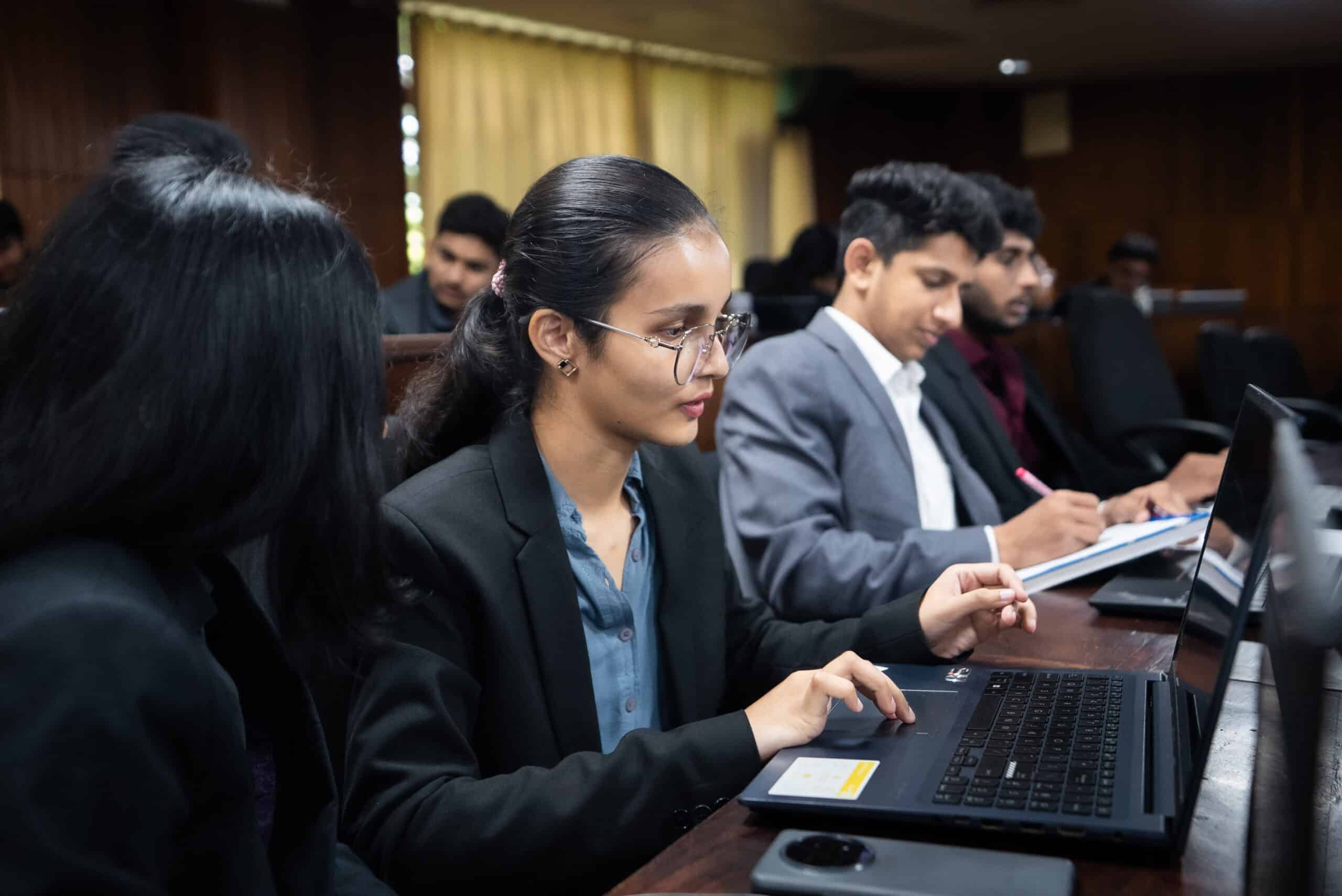

The Capstone Project in the program is a two‑semester experiential learning initiative designed to transform engineering knowledge into real-world innovation. Through a structured and rigorous process, students identify problems, develop feasible proposals, implement solutions, and demonstrate their outcomes through prototypes, research outputs, or publications.
The process begins with orientation, team formation, and idea generation. In Phase I (Capstone Project I), students conduct literature reviews, define problem statements, assess feasibility, and prepare detailed project proposals. This ensures clarity of objectives and readiness for execution.
In Phase II (Capstone Project II), students implement their design or research model, perform systematic testing, validate performance, and refine solutions through iterative reviews. The project concludes with a final demonstration and viva voce evaluated by academic and external experts.
The Capstone framework integrates Program Outcomes (POs) and Program Specific Outcomes (PSOs), fostering engineering design skills, problem-solving, research aptitude, teamwork, ethical awareness, and societal impact. Students regularly publish their work in reputed international conferences (IEEE, Springer, Elsevier) and Scopus-indexed journals; several teams have also filed patents.
Overall, the Capstone Project delivers a transformative journey that equips students with technical competence, innovation mindset, and professional readiness for industry and higher studies.










The Social Internship is a cornerstone of the undergraduate experience, designed to cultivate a deep sense of civic responsibility and empathetic leadership. By moving beyond the classroom, students engage directly with grassroots realities, bridging the gap between academic theory and the practical challenges faced by marginalized communities.
Core Objectives:
The program aims to transform students from passive learners into active contributors to society. Key objectives include:
a) Empathy & Value Creation: Developing a firsthand understanding of social disparities and building personal value systems rooted in service and respect.
b) Grassroots Exposure: Gaining insight into the complexities of rural and urban social issues, including inequality, environmental sustainability, and human rights.
c) Professional Skill Integration: Applying communication, problem-solving, and organizational skills in a non-corporate, mission-driven environment.