What is the eligibility requirement for admission to B. Des. in Visual Communication Design at Alliance University?
Applicants must have successfully completed 10+2 (Class XII) or an equivalent examination from a recognised Board or Council with a minimum aggregate of 50% marks (45% for SC/ST candidates). The application process involves registering on the University’s admission portal, completing the online form, and submitting the required documents, including mark sheets, a creative portfolio, and a passport-sized photograph. Following payment of the application fee, candidates are assessed through the Alliance Design Aptitude Test (ADAT), a portfolio review, and a personal interview. Together, these assessments evaluate a candidate’s design aptitude, creativity, and potential.
Do students get trained in industry-standard design software like Adobe Creative Suite (Photoshop, Illustrator, InDesign, After Effects, Premiere Pro)?
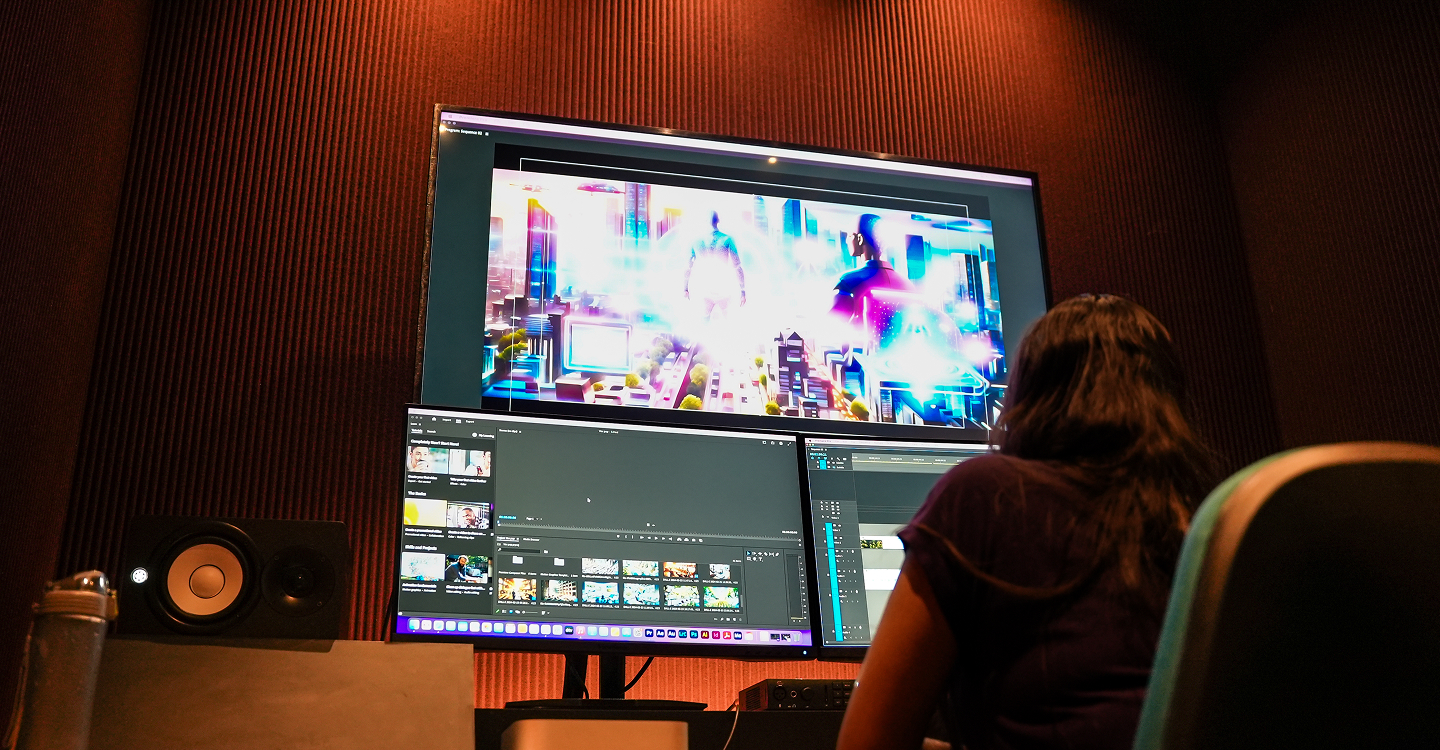
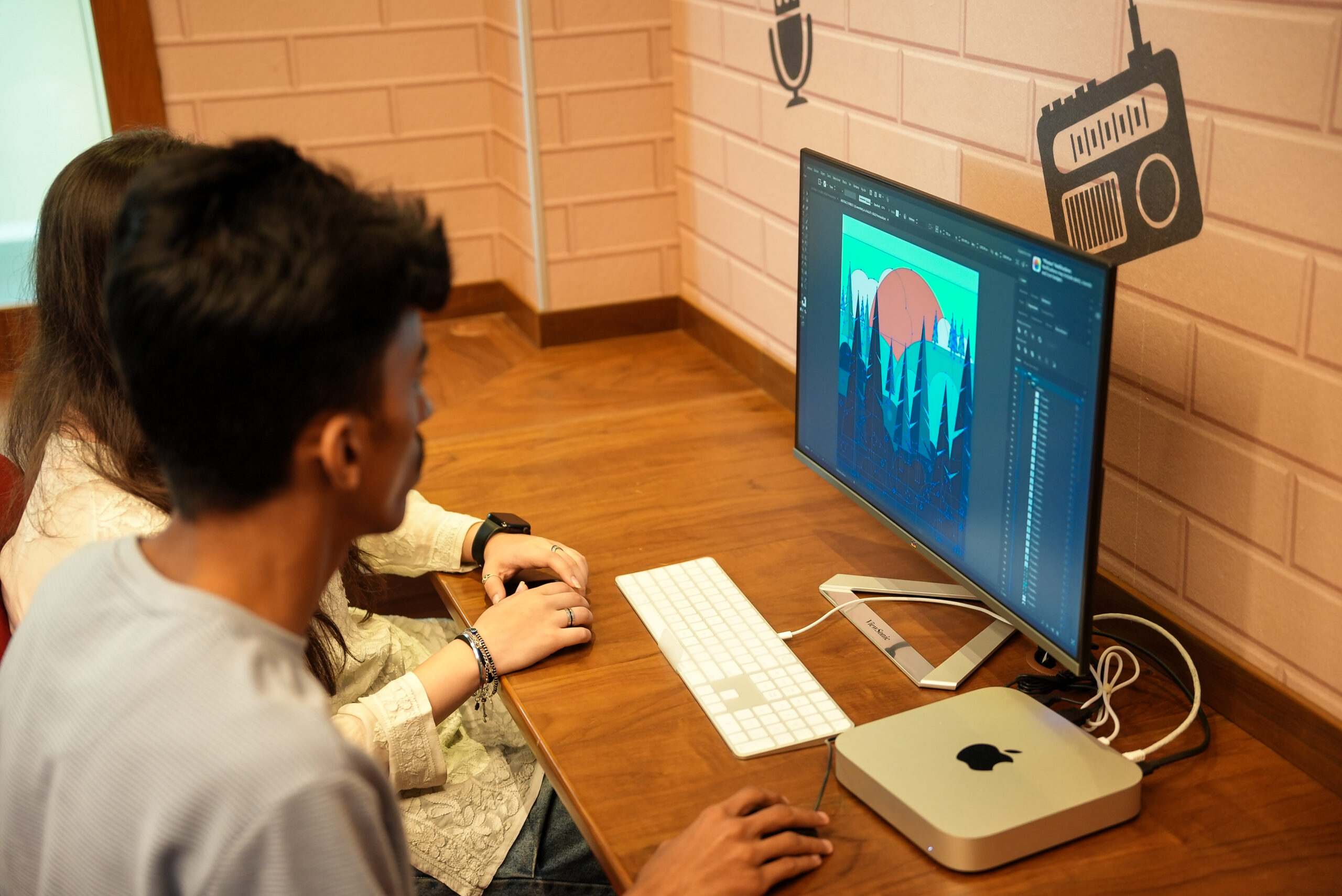
Yes. Students receive hands-on training in industry-standard design software such as the Adobe Creative Suite, including Photoshop, Illustrator, InDesign, After Effects, and Premiere Pro, along with other contemporary design tools, as part of their academic and studio practice.
Is there an opportunity to work on internships, real-time projects, campaigns, or client briefs?
Yes. Alliance University places strong emphasis on experiential learning. Students have opportunities to work on internships with leading organisations, participate in real-time projects, and engage with live campaigns and client briefs. These experiences are carefully integrated into the curriculum, ensuring that classroom learning is translated into professional application. Through industry collaborations, the Centre for Industry Interaction, and faculty-led initiatives, students consistently gain exposure to the dynamic challenges of the creative sector.
Can students showcase their work in exhibitions, design festivals, or portfolio reviews?
Yes. Students at Alliance University are encouraged to present their work through exhibitions, portfolio reviews, and participation in design festivals, providing them with valuable exposure to professional critique and industry recognition. Alliance University annually hosts a Design Jury where design students showcase their work to industry leaders and experienced faculty members, providing them with valuable feedback and exposure to real-world perspectives.
Do students get exposure to interdisciplinary collaboration with business, media, and technology domains?
Yes. The B. Des. programme is structured to provide significant exposure to interdisciplinary collaboration, enabling students to work at the intersection of business, media, and technology. This prepares them for the increasingly convergent nature of creative industries.
What kind of career support and placement opportunities does Alliance University provide for Visual Communication graduates?
Alliance University offers comprehensive career support and placement services through its Career Advancement and Networking (CAN) office and the Centre for Industry Interaction (CII). These units facilitate internships, industry projects, and placement opportunities with reputed organisations, while also providing mentorship and career counselling to help students navigate the creative job market.
What exciting career paths can I pursue after completing the B. Des. in Visual Communication Design at Alliance University?
Graduates can pursue a wide range of creative career paths across design, media, advertising, branding, technology, and entertainment. Opportunities include roles such as graphic designer, brand strategist, UI/UX designer, digital illustrator, motion graphics artist, advertising and campaign designer, art director, and visual storyteller. With the programme’s emphasis on research-driven practice and industry exposure, graduates are also equipped for careers in emerging domains such as digital product design, interactive media, and creative entrepreneurship.
What in-demand skills, like Adobe Suite or Figma, will I gain from Alliance University’s B. Des. in Visual Communication Design?
The programme equips students with both creative and industry-relevant skills. Alongside mastering design thinking, storytelling, and visual strategy, students gain proficiency in Adobe Creative Suite (Photoshop, Illustrator, InDesign, After Effects) and collaborative design platforms like Figma. They also engage with motion graphics, UI/UX fundamentals, digital illustration, and branding, ensuring they graduate with a skill set aligned with the demands of contemporary creative industries.
Are there scholarships or financial aid options for students in Alliance University’s B. Des. in Visual Communication Design?
Yes. Alliance University provides a wide range of scholarships and financial aid opportunities for deserving and meritorious students. These are awarded on the basis of academic performance, national entrance exam scores, and other achievements such as excellence in sports or cultural activities, as well as on need-based considerations.
AUSAT: Students scoring 75% or above in Class 10 and 12 may receive 25%, 35%, or 50% tuition fee waivers.
UCEED: Scores ? 200 qualify for a 35% waiver; scores ? 150 qualify for 25%.
NID DAT: Percentiles ? 90 receive 50%; 85–89.99 receive 35%; 80–84.99 receive 25%.
What cutting-edge facilities, like digital design labs, are available for B. Des. Visual Communication Design students at Alliance University?
Students benefit from state-of-the-art facilities, including advanced digital design labs, industry-standard software, and professional tools for graphic design, animation, and UI/UX development. In addition, they have access to photography and video production studios, digital imaging labs, printmaking workshops, and collaborative makerspaces. These facilities replicate professional environments, ensuring students develop both creative vision and technical expertise.
Can I take up freelance design projects while pursuing the B. Des. in Visual Communication Design at Alliance University?
Yes. Students are encouraged to explore freelance opportunities and independent projects alongside their academic studies. With the guidance of faculty mentors and the support of the Career Advancement & Networking (CAN) office, students can manage freelance work professionally and ethically. This enables them to build industry experience, expand their portfolios, and apply classroom learning to real-world briefs.
What is the syllabus of Visual Communication?
The B. Des. in Visual Communication Design follows a comprehensive curriculum that balances conceptual exploration with technical proficiency. Beginning with core courses in design principles, visual culture, and communication theory, the programme advances into typography, illustration, photography, branding, digital media, animation, motion graphics, UI/UX, and interactive design. Students also engage in design research, creative strategy, storytelling, and portfolio development. The curriculum is enriched with workshops, internships, and live projects, preparing graduates to thrive in the evolving landscape of visual communication.
Why choose Alliance University for B. Des. in Visual Communication Design?
Alliance University provides a learning environment that blends creativity, innovation, and professional relevance. The programme nurtures conceptual thinking, research-driven design practice, and technical mastery, while giving students access to cutting-edge facilities such as digital labs and media studios. With opportunities for internships, live projects, and client briefs, the curriculum ensures that students graduate with practical exposure and strong portfolios. A culture of mentorship, scholarships, and global networking further strengthens the student experience, making Alliance University an ideal choice for aspiring designers.
What are the career opportunities in B. Des. Visual Communication at Alliance University?
Graduates of the programme can enter diverse fields such as graphic design, advertising, branding, digital media, UI/UX, motion graphics, and visual storytelling. They are prepared for positions like art director, brand strategist, digital illustrator, campaign designer, or can establish themselves as freelance designers and entrepreneurs. The University’s industry networks and portfolio-driven training ensure that graduates are both employment-ready and equipped to shape their own creative journeys.
What is Visual Communication in B. Des.?
Visual Communication refers to the practice of conveying messages, narratives, and ideas through visual media. At Alliance University, this is taught as a blend of design principles, aesthetics, and technology applied across print, digital, and interactive platforms. Students engage with typography, photography, branding, motion graphics, UI/UX, and design research, while also studying communication theory and cultural contexts. By integrating creativity with critical inquiry, the programme prepares students to craft meaningful visual experiences and contribute to shaping culture and society through design.












The Social Internship is a cornerstone of the undergraduate experience, designed to cultivate a deep sense of civic responsibility and empathetic leadership. By moving beyond the classroom, students engage directly with grassroots realities, bridging the gap between academic theory and the practical challenges faced by marginalized communities.
Core Objectives:
The program aims to transform students from passive learners into active contributors to society. Key objectives include:
Empathy & Value Creation: Developing a firsthand understanding of social disparities and building personal value systems rooted in service and respect.
Grassroots Exposure: Gaining insight into the complexities of rural and urban social issues, including inequality, environmental sustainability, and human rights.
Professional Skill Integration: Applying communication, problem-solving, and organizational skills in a non-corporate, mission-driven environment.