Brief Overview

Bachelor of Design (BDes) in Product Design

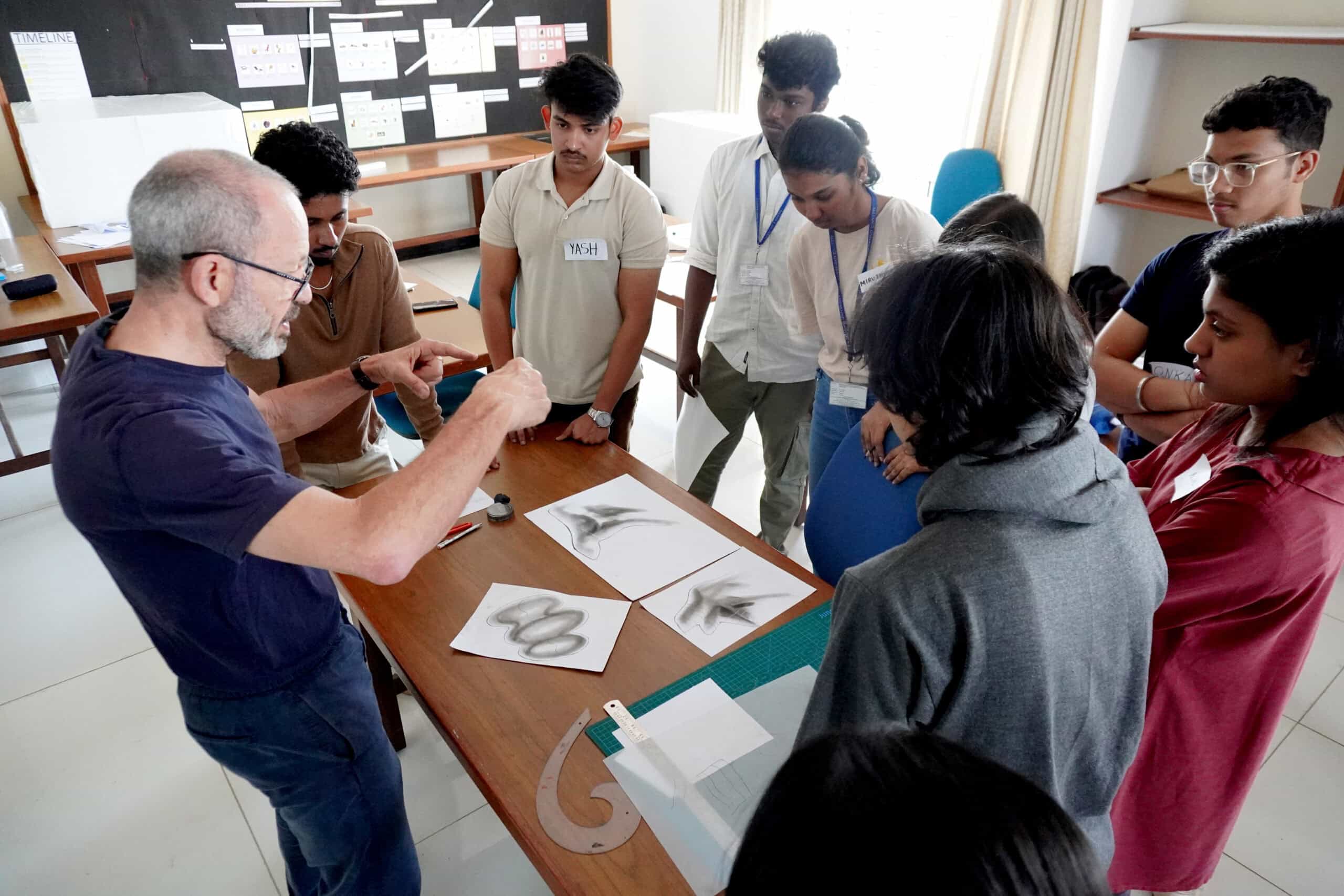
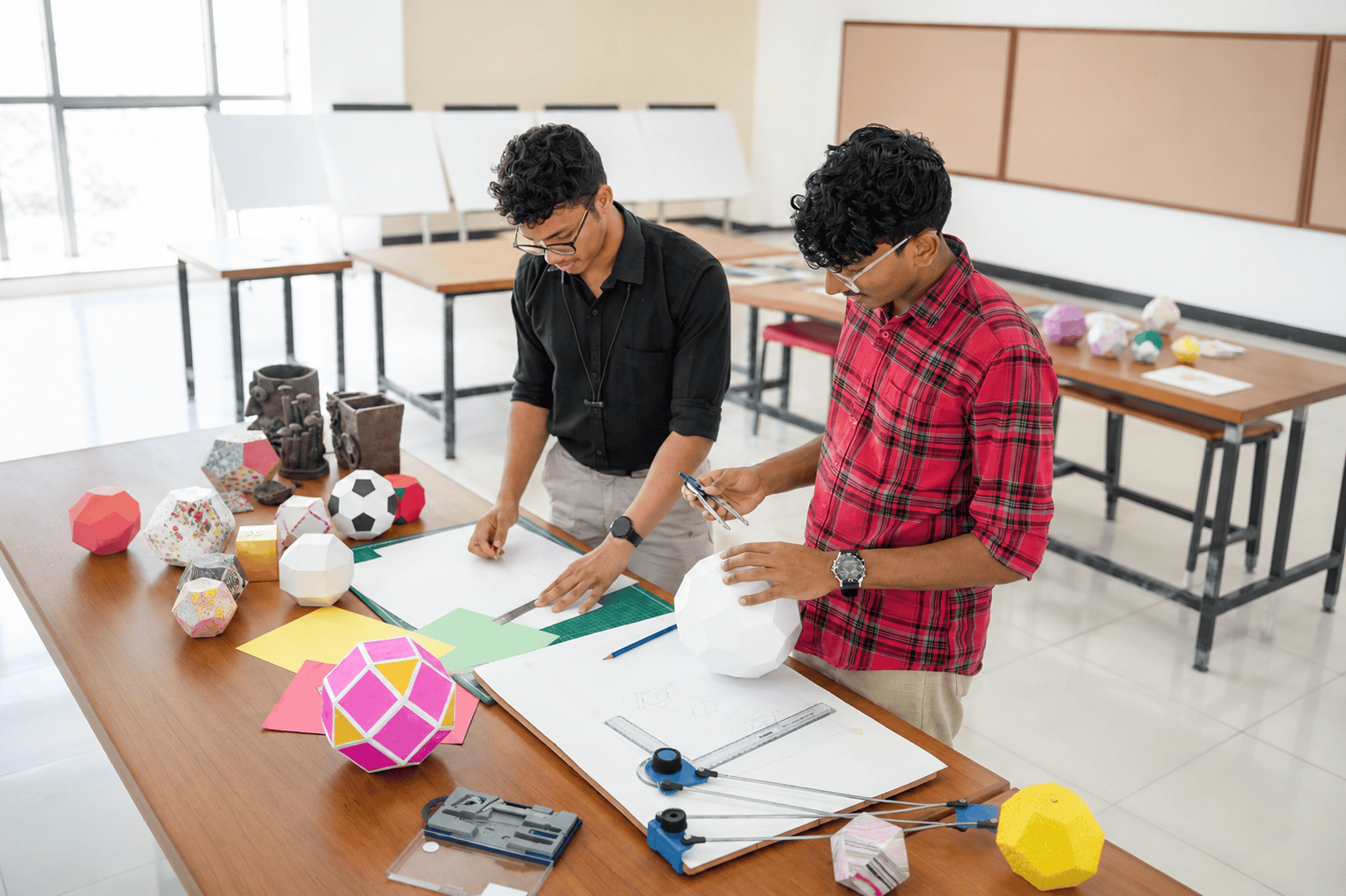
Product design involves the creation of new and innovative products that are both aesthetic and functional. The objective of product design is to analyse real-world issues, visualize feasible solutions, and provide tangible solutions. It encompasses design, technology, and mechanics of a product. Only when these three elements blend, do you have a usable product. Simply put, product design offers real solutions to everyday problems. Applications of product design span multiple industries. Furniture, food, sports, leisure, travel, jewellery, medicine, and many more fields rely on product design to function effectively. Product designers begin the design process by envisioning the solution and creating sketches. They then create a working prototype of the solution. The prototype is put through a series of tests to ensure it fulfils its purpose effectively and efficiently. Once it passes the testing phase, they begin the manufacture of the product on a large scale. The entire creative process – from idea to execution – involves not just product designers, but engineers as well. The Product Design course at Strate, Bangalore aims at training designers who are able to implement systemic thinking and design services and products satisfying those usages and issues. It is open to designers who want to create artistic yet functional products.

Duration

Four Years / Eight Semesters
PEO (Program Educational Objectives)

PEO1 - Graduates will be capable of applying creative thinking and problem-solving
skills to design innovative and effective solutions to - user problems and challenges in the
product design industry,
Course Catalogue

PEO2 - Graduates will have the skills and knowledge necessary to pursue full-time
employment or entrepreneurial opportunities as a product designer, including the ability
to identify and harness business opportunities, address market gaps, and manage projects
effectively, while working in an interdisciplinary professional setting.

PEO3 - Graduates will possess a global perspective on product design, including an
understanding of diverse socio-cultural influences, international markets, local and global
manufacturing paradigms.

PEO4 - Graduates will recognize the importance of lifelong learning and professional
development and will be committed to continuing their education formally or informally
and staying abreast of advancements in the field of design throughout their careers.

PEO5 - Graduates will understand the ethical considerations and responsibilities of a
product designer, including issues related to cultural appropriation, sustainability, fair
trade and labour practices, and intellectual property rights, and will integrate ethical
principles into their design practice.

PEO6 - Graduates will provide thought leadership, design foresight and a nuanced
understanding of global and contemporary design paradigms in service of improving life
on the planet.

PSO (Program Specific Outcomes)

PSO1 - Students will develop proficiency in product sketching and drawing techniques, including technical drawing and product rendering both analogue and digital. Gain knowledge to create thematic boards, infographics, and user personas to communicate their design ideas and concepts effectively and visually.

PSO2 - Students will acquire technical skills in making with hard, linear, and moldable materials including wood, various metals, clay, textiles, different types of plastics, etc., allowing them to make informed decisions about material selection and manipulation in their designs.

PSO3 - Students will gain an understanding of manufacturing techniques for small- and large-scale production of a wide variety of product enabling them to translate design concepts into real objects with precision, dexterity and at scale.

PSO4 - Students will learn to use industry-standard software applications for product design, such as Adobe Illustrator, Photoshop, and related 2D & 3D CAD software, to create digital designs, drawings, and presentations.

PSO4 - Students will develop the ability to conduct research, analyze and synthesize user needs, study design trends, distill useful insights, to inform their design decisions and stay ahead of market demands.

PSO5 – Students will develop the ability to creatively problem solve and evolve design solutions that align to human-centered, sustainable, and inclusive design principles, while ensuring business viability.

PSO6 - Students will engage in collaborative design projects and interdisciplinary teamwork, learning to communicate effectively, negotiate ideas, and work collaboratively with professionals from diverse backgrounds.’

PSO7 - Students will compile a professional portfolio showcasing their design projects, technical skills, creative abilities, and develop a high degree of professional conduct which demonstrates their readiness for entry into the design industry or advanced study in product design.

PO (Program Outcomes)

PO 1: Disciplinary/Interdisciplinary Knowledge: Apply the knowledge of design principles,
technical proficiency, creative problem-solving research aptitude, and portfolio development
to address complex design challenges, foster innovation, and adapt to rapidly evolving
world.

PO 2: Complex Problem Solving: Ability to resolve complex design problems using various
methods and tools of design process, critical analysis and synthesis, creative thinking, usercentered design, design research, prototyping and reflection.

PO 3: Critical Thinking: Ability to independently and deeply - analyze design problems,
research, examine and evaluate concepts, provide constructive critique, consider contexts,
debate contrarian views, prioritize, base decisions on evidence, to create and develop well
considered design outcomes.

PO 4: Creativity: Ability to generate new innovative ideas, experiment with new techniques,
refine and creatively reframe design concepts, and problems and develop creative solutions
and outcomes.

PO 5: Communication Skills: Ability to communicate visually and aesthetically, deliver
engaging presentations, articulate clearly, participate in constructive critique, communicate
with clients and teams, and navigate cross-cultural contexts.

PO 6: Analytical Reasoning / Thinking: Ability to break down complex problems, analyze
information, think broadly and critically, and use evidence to validate concepts and make
informed decisions.

PO 7: Research skills: Ability to conduct research effectively using various methodologies,
prioritize user-centeredness and contextual understanding, and validate design problems to
create solutions informed by evidence and trends.

PO 8: Coordinating and collaborating: Exhibit adeptness in collaborating with diverse
teams, negotiating coordinated efforts, taking tasks, and efficiently working as part of a
group towards a common creative goal.

PO 9: Leadership readiness/qualities: demonstrate skills and qualities required to proactively engage, autonomously self-direct, creatively lead, take risks, seek-out knowledge and
provide solutions, develop vision and direction and excel as design leaders in the industry.

PO 10: Learning Skills: Ability to acquire new skills and knowledge adaptively and
independently throughout their careers.

PO 11: Digital and Technological Skills: Equip graduates with proficiency in contemporary
digital tools and technologies to stay relevant and drive creativity, industry excellence and
innovation.

PO 12: Multi-cultural competence & inclusive spirit: Ability apply universal design
principles. design with sensitivity, empathy, and respect, for diverse cultures and
communities across various geographies.

PO 13: Value Inculcation: Cultivating designers with a strong ethical foundation, fostering
responsible creativity, and promoting socially conscious practices within the design industry.

PO 14: Authority, responsibility & accountability: Ability to effectively navigate authority,
embrace responsibility, and uphold accountability in their creative processes,

PO 15: Environmental Awareness and Action: Exhibit acquired knowledge, skills, attitudes,
and values to proactively address environmental challenges, including mitigating
degradation, climate change, and pollution, implementing effective waste management, and
promoting sustainable development and living.

PO 16: Community Engagement and Service: Ability to actively engage in community
service and activities, leveraging their skills to contribute to the well-being and enhancement
of society at large.

PO 17: Empathy: Ability to empathize with and comprehend the perspectives, experiences,
and emotions of individuals or groups within the design context.


Curriculum Structure

Year 1
Semester-wise Syllabus

SEMESTER - I

Course Name Domain Category
English Academic Edge AE
French Academic Edge AE
Design software initiation Academic Edge AE
Individual and Society Academic Edge AE
Critical thinking  Academic Edge AE
Perspective - I School Core MAJOR
Graphic Design School Core MAJOR
Materials and Processes School Core MAJOR
Models and Prototypes -1 School Core  MAJOR
Creative Culture School Core MAJOR
Basic Design School Core MAJOR

SEMESTER - II

Course Name Domain Category
French - II Languages AE
English for Designers - II Languages AE
2D Intro Software AE
Creativity Methods  Soft Skills AE
Des-AI-gn and Contemporary World Software AE
Eastern and Western Societies Academic Edge AE
Stress Prevention and Psychological First Aid Academic Edge MAJOR
Perspective - II Representation Technics MAJOR
Graphique Design - II Representation Technics MAJOR
Basic Design - II Design Core MAJOR
Models and Protos Making MAJOR
Design Initiation - I Design Core MINOR
Year 2
Semester-wise Syllabus

SEMESTER - III

Course Name Domain Category
Full 2 Semester International   Exchange 
(OR)
2D-3D  Design software AE
Sketch of OBJECTS  representation technics AE
Des-AI-gner software AE
Marketing  strategy AE
Art-history + PD Cult culture AE
Reality design - design core AE
graphic design -III representation technics MAJOR
sensorial design soft skills MAJOR
materials and process -II making MAJOR
model and proto -III making MAJOR
Ethnography for product strategy soft skills MAJOR
Design management Project-I soft skills MINOR
Design Sketches and Rough representation technics MINOR

SEMESTER - IV

Course Name Domain Category
Full 2 Semester International   Exchange 
(OR)
2d Drawing + photorealism representation technics AE
3D advanced  software AE
getting profesional-I soft skills AE
theater/comedy soft skills AE
 manufacturing constraints product Design  making MAJOR
industry project -I Discipline core MINOR
industry short project -I Discipline core MINOR
creativity methods school core MAJOR
masterclasses -I Discipline core MINOR
Year 3
Semester-wise Syllabus

SEMESTER - V

Course Name Domain Category
Marketing -II strategy AE
International design competition discipline core AE-LBL
Internship (2 months) school core Major
long project - II discipline core MAJOR
Short project -II discipline core MAJOR
Profesional rendering - Keyshot/blender software MAJOR
Design Tech packs ???? representation technics MAJOR
human science soft skills MINOR
Design analisys : proportions, surface and details school core MINOR
masterclass - II discipline core MINOR

SEMESTER - VI

Course Name Domain Category
personal project  school core AE-LBL
research and writing  school core MAJOR
ergonomics  school core MAJOR
industry project - II discipline core  MAJOR
short industry project - II discipline core  MAJOR
Product Design culture discipline core  MAJOR
Speed form research discipline core  MINOR
sensorial design - II school core MAJOR
systemic approach  soft skills MINOR
marketing - III strategy MINOR
Design strategy, vision and range  strategy MINOR
biomimicry and circular economy strategy MINOR
PORTFOLIO - professionalisation linkedin school core MINOR
Year 4
Semester-wise Syllabus

SEMESTER - VII

Course Name Domain Category
internship discipline core  MAJOR
Thesis school core MINOR
soap box AE - beyond classroom AE-LBL

SEMESTER - VIII

Course Name Domain Category
getting professional -II soft skills AE
personal project /competition AE - beyond classroom AE-LBL
graduation project  discipline core MAJOR
portfolio  discipline core MAJOR
cognitive science  soft skills MINOR
Design management strategy MINOR
Minors
Semester-wise Syllabus
  Industrial Design
Project Management
Social Design and
Inclusivity
Design for
Business
SEMESTER III Sensorial Design Sensorial Design Econmomy Basics
Design Project Management - I Enthnography - 1 Finance Basics
 
SEMESTER IV Industry Project - I Social Project - 1 Business Plan and Models
Industry Short Project - I Social Short Project - I Drawing Sheet to Market Short Project - I
 
SEMESTER V Internship (2 months) Volunteering Internship (2 months) Internship (2 months)
Human Science Human Science Human Science
Portfolio - Professionalisation Social Science - I Industrial Property - I
Industry Long Project - II Design for Social Impact - I Design for Business - I
 
SEMESTER VI Thesis  Thesis  Thesis 
 
SEMESTER VII Systemic Approach Psychology International Commerce
Marketing - III Marketing - III Marketing - III
Design Strategy and Vision and Range Field Research Project Brand Identity and Social Presence
Biomimicry and Circukar Eco NGO and Vounteering Economy Costing and Marging Project - I
 
SEMESTER VIII Cognitive Science Cognitive Science Logistics
Design Management Project Management Project Management
? B. Des. PRODUCT DESIGN
NA
Creative Thinking
CAD
School of Design offers an interdisciplinary open elective that blends imagination with precision
The course introduces students to creative problem-solving methods, design thinking, and visual ideation, alongside hands-on training in Computer-Aided Design (CAD)
Learners explore how abstract ideas can be transformed into structured digital models using industry-relevant tools.
Designed for students across disciplines, the elective strengthens innovation skills, spatial thinking, and visual communication—empowering learners to confidently translate concepts into clear, professional design outcomes suitable for academic, entrepreneurial, and industry contexts.
Sed ut perspiciatis

Capstone Project

Capstone Project
The Capstone Project is a culmination of the design specialization, integrating research, critical thinking, and creative practice to address a real-world problem. It involves identifying a contextual design challenge, conducting user and stakeholder research, developing conceptual frameworks, and translating insights into innovative, socially responsive design solutions. The project demonstrates proficiency in design methodology, experimentation, visual communication, and reflective practice, while showcasing the ability to synthesize theory with practice.

Product Design – Capstone Project

The Product Design Capstone Project involves identifying a user-centric problem and developing an innovative physical or hybrid product solution. Through material exploration, prototyping, ergonomics, and sustainability considerations, students translate research insights into functional design outcomes. The project highlights design thinking, iterative development, and the integration of aesthetics, usability, and manufacturing processes.

Dissertation
Sed ut perspiciatis unde omnis
Dissertation
COURSE OF INDEPENDENT STUDY

Independent Study

NA

ACTIVITY POINTS

Activity Points

Content available in Activity Point Brochure

STUDENT
RECRUITER

My academic excellence and diploma medal earned through rigorous civil engineering projects in the department paved my path to becoming a top performer.

C Varshith Royal

Batch: 2021-25

C Varshith Royal

Strong fundamentals from department coursework gave me confidence to balance studies while building my successful business.

Kushal M Reddy

Batch: 2021-25

Kushal M Reddy

Outstanding project work and research aptitude in the civil department prepared me for master’s success at a foreign university.

Chirag B

Batch: 2018-22

Chirag B

Throughout my 4 years of engineering at ‘Alliance College of Engineering and Design’, I had countless opportunities to develop analytical skills, leadership and proactive thinking through various programs and events. These attributes were the key reasons because of which I was successfully placed at ‘ BYJUS-the learning app’, with a good package. Big thanks to all my faculty members and friends for this amazing journey at Alliance. My sincere appreciation & gratitude to the Career Advancement & Networking Department for their support and encouragement, this would not be possible without them.

Crisel Manisha D'Souza

Branch: Electronics and Communication / Batch: 2014-18

Crisel Manisha D'Souza

“Strong fundamentals from department coursework gave me confidence to balance studies while building my successful business.”

Kushal M Reddy

Batch: 2021-25

Kushal M Reddy

“Outstanding project work and research aptitude in the civil department prepared me for master’s success at a foreign university.”

Chirag B

Batch: 2018-22

Chirag B

“Practical training and innovation encouraged in department labs inspired me to launch my own engineering venture.”

Naveen E

Batch: 2018-22

Naveen E

My student life at Alliance University is one of the best time in my life and had its ups and downs. But overall I feel that studying at Alliance was a great learning experience every day that has helped me tackle professional problems with ease. The Career and Advancement Network office of Alliance University which has placed a number of students also laid a platform for me to get into Sunlux Technovations. I’m thankful for this opportunity for helping me through the process.

Suman M

Branch: Electronics and Communication / Batch: 2014-18

Suman M

It has been a great experience to be a part of Alliance University. It’s difficult to sum up the memories and experience of four years in few lines. There is something motivational and special in this environment and infrastructure which made us study and enjoy co-curricular activities. All the faculty and staff members are very helpful and they guided us all the time. Different events and sessions did boost my confidence to a great extent that I can experience at my workplace now. These four years have given me friends for life. It has been an unforgettable journey. I have spent my wonderful days of life in Alliance University. Thanks to all who have been a part of my life in encouraging me.

Shraddha Ravindra Parate

Branch: Aerospace / Batch: 2014-18

Shraddha Ravindra Parate

I chose Alliance University for my studies in bachelors. This university has provided me the platform to explore my abilities, skills and dynamic faculty members have helped me explore me a lot in my area of studies. International students and national students integration, multi-lingual friends, student-friendly environment is the plus point for the students to have a great time. I found the decision to study at Alliance was my best to upgrade my knowledge and skills. Excellent, experienced and approachable faculty members, friendly administration and extensive practical exposure is the asset of this University. Thank you Alliance for being a part of my life and for the wonderful experience for lifelong remembrance and good memories.

Shaik Mohammed Aftab Alam

Branch: Aerospace / Batch: 2014-18

Shaik Mohammed Aftab Alam
Hem Sevak
Hem Sevak
Shylendr R
Shylendr R
ALANA RAJ
ALANA RAJ
SASHMITHA S S
SASHMITHA S S
Shreya Goutham
Shreya Goutham
Bhoomika G S
Bhoomika G S
Anushree Chakraborty
Annie Rajasekaran
Annie Rajasekaran
Harman Singh
Harman Singh
Jayananthini T
Jayananthini T

“My academic excellence and diploma medal earned through rigorous civil engineering projects in the department paved my path to becoming a top performer.”

C Varshith Royal

Batch: 2021-25

C Varshith Royal
Program Eligibility Criteria

Eligibility Criteria

Available in ASOD brochure

STUDY ABROAD OPTIONS

Learn Across Borders

Experience global education through our international study opportunities designed to broaden academic perspectives and cultural understanding. These programmes enable students to study at partner universities abroad, gain international exposure, and develop the global competencies needed to succeed in an interconnected world.
Learn More