Admissions Open 2026-2027. Apply Now Admissions Open 2026-2027. Apply Now Admissions Open 2026-2027. Apply Now Admissions Open 2026-2027. Apply Now Admissions Open 2026-2027. Apply Now Admissions Open 2026-2027. Apply Now

The GAME DESIGN(Honours) program is an undergraduate degree program focused on preparing students for careers in the dynamic and innovative field of game development. This specialized program combines computer science fundamentals with specialized courses in game design, development, and production.

This program equips students with the knowledge, skills, and practical experience needed to pursue careers as game developers, designers, programmers, artists, or producers in the fast-paced and competitive game industry. Graduates are prepared to contribute to the creation of engaging and immersive gaming experiences across various platforms and genres.

Why Choose
BCA - GAME DESIGN
at Alliance University?
Lorem Ipsum is simply dummy
Holistic Industry Integration
To provide students with a well-rounded education that includes both foundational computer science knowledge and specialized skills relevant to the gaming and graphics industry.
Collaborative & Ethical Practicum
To focus on collaborative projects, internships, and ethical considerations reflects the practical aspects and responsibilities associated with working in these dynamic fields.
Core Technical Programming
Demonstrate proficiency in programming languages.
Visual Asset Architecture
Develop the ability to design and implement graphical elements in games.
Dynamic Animation Mastery
Showcase proficiency in creating animations for games.
University Core

University Core courses provide interdisciplinary and value-based education common to all undergraduate students across disciplines. These courses promote constitutional values, Indian knowledge systems, sustainability, critical thinking, entrepreneurship, and social responsibility as envisaged under NEP and UGCF guidelines.

Minors

The program electives in the BCA Hons programme with specializations in Data Science, Artificial Intelligence & Machine Learning, and Game Development are designed to provide students with additional domain expertise beyond their chosen specialization, enabling them to build interdisciplinary skills aligned with evolving industry demands.

Introduced as a structured academic pathway from the second year onwards, minors offer flexibility for students to customize their learning journey based on their interests and career aspirations. This approach allows learners to complement their major specialization with emerging technology domains, enhancing both depth and versatility.

Students can choose from a wide range of minor tracks such as Cyber Security, Cloud Computing, Full Stack Development, Internet of Things (IoT), Business Analytics, UI/UX Design, and Software Product Development, among others, ensuring alignment with current industry trends and innovation areas.

The Minor Pathways emphasize:

  • Specialized skill development in high-demand domains

  • Hands-on learning through labs, mini-projects, and real-world applications

  • Integration of industry certifications and practical tools

  • Enhanced employability through multi-domain expertise

By complementing the Program Core and chosen specialization, the Minor Pathways enable students to graduate with multi-disciplinary competencies, making them adaptable, industry-ready professionals prepared for diverse roles in the IT ecosystem or higher studies.

Minors List:

  • Aeronautics

  • Astronautics

  • Unmanned Aerial Vehicles (UAV)

  • Avionics

  • Structural Engineering

  • Geoenvironmental & Infrastructure Engineering

  • Nature Based Solutions

  • Sustainable Technology

  • Smart Systems

  • Game Development

  • Business Systems

  • Quantum Computing

  • Data Science

  • Software Product Development

  • Artificial Intelligence & Futuristic Technologies

  • Artificial Intelligence & Machine Learning

  • Cyber Security

  • iOS Application Development

  • Data Engineering

  • Full Stack Development

  • Cloud Computing

  • Natural Language Processing and Text Analytics Systems

  • Computer Vision and Image Analysis

  • AI in Autonomous Systems

  • Blockchain Technologies

  • Internet of Things

  • DevOps

  • Immersive Technology

  • Advanced AI and Blockchain

  • AI for Healthcare and Life Sciences

  • AI for Robotics and Automation

  • Cybersecurity and Privacy in AI

  • Data Analytics

  • Embedded System and IoT

  • Next Generation Wireless Communication Systems

  • VLSI Design

  • Bio Medical Engineering

  • Automotive Electronics

  • Semiconductor Technology

  • Electric Vehicle Technology

  • Energy Management and Audit

  • Smart Grid and E-Mobility

  • Green Technology

  • Robotics and Automation

  • Smart Manufacturing Technology

  • Performing Arts and Creative Technologies

  • Business Studies

  • Computer Science

  • Data Science

  • Economics

  • Fine Arts

  • Literary & Cultural Studies

  • Media & Film Studies

  • Political Science

  • Psychology

  • Sociology

  • Chemistry

  • International Relations

  • Mathematics

  • Philosophy

  • Physics

  • Public Policy

PEO (Program Educational Objectives)

PEO 1:
To equip graduates with a strong foundation in computing principles and emerging technologies, enabling them to design, develop, and innovate scalable and intelligent solutions

PEO 2:
To develop graduates with leadership, problem-solving, and entrepreneurial skills to drive technological advancements and contribute to industry, research, and startup ecosystems

PEO 3:
To instill ethical responsibility, sustainability, and a commitment to using technology for addressing global and societal challenges.

PEO 4:
To cultivate expertise in AI and ML algorithms, enabling graduates to build intelligent and adaptive systems

PSO (Program Specific Outcomes)

PSO 1:
To design, implement, and optimize intelligent, secure, and scalable computing solutions by integrating emerging technologies.

PSO 2:
To apply computational thinking and interdisciplinary knowledge to develop innovative, ethical, and sustainable technology solutions that address real- world societal and industrial challenges.

PSO 3:
To develop machine learning models that enhance automation, personalization, and decision support in various domains

PO (Program Outcomes)

PO 1:
Engineering Knowledge: Apply knowledge of mathematics, natural science, computing, engineering fundamentals and an engineering specialization as specified in WK1 to WK4 respectively to develop to the solution of complex engineering problems.

PO 2:
Problem Analysis: Identify, formulate, review research literature and analyze complex engineering problems reaching substantiated conclusions with consideration for sustainable development. (WK1 to WK4)

PO 3:
Design/Development of Solutions: Design creative solutions for complex engineering problems and design/develop systems/components/processes to meet identified needs with consideration for the public health and safety, whole-life cost, net zero carbon, culture, society and environment as required. (WK5)

PO 4:
Conduct Investigations of Complex Problems: Conduct investigations of complex engineering problems using research-based knowledge including design of experiments, modelling, analysis & interpretation of data to provide valid conclusions. (WK8).

PO 5:
Engineering Tool Usage: Create, select and apply appropriate techniques, resources and modern engineering & IT tools, including prediction and modelling recognizing their limitations to solve complex engineering problems. (WK2 and WK6)

PO 6:
The Engineer and The World: Analyze and evaluate societal and environmental aspects while solving complex engineering problems for its impact on sustainability with reference to economy, health, safety, legal framework, culture and environment. (WK1, WK5, and WK7).

PO 7:
Ethics: Apply ethical principles and commit to professional ethics, human values, diversity and inclusion; adhere to national & international laws. (WK9)

PO 8:
Individual and Collaborative Team work: Function effectively as an individual, and as a member or leader in diverse/multi-disciplinary teams.

PO 9:
Communication: Communicate effectively and inclusively within the engineering community and society at large, such as being able to comprehend and write effective reports and design documentation, make effective presentations considering cultural, language, and learning differences

PO 10:
Project Management and Finance: Apply knowledge and understanding of engineering management principles and economic decision-making and apply these to one’s own work, as a member and leader in a team, and to manage projects and in multidisciplinary environments.

PO 11:
Life-Long Learning: Recognize the need for, and have the preparation and ability for i) independent and life-long learning ii) adaptability to new and emerging technologies and iii) critical thinking in the broadest context of technological change.

P12 :

Life-long Learning: Recognize the need for continuous learning to keep pace with emerging technologies and industry practices.

Program Core

The Program Core of the BCA Hons programme with specializations in Data Science, Artificial Intelligence & Machine Learning, and Game Development forms the foundation of the curriculum, focusing on building strong fundamental knowledge and practical expertise in core computing domains.

It is carefully structured to enable students to analyze, design, and develop efficient software solutions aligned with current industry needs. The core includes essential subjects such as Programming (Java, Python), Data Structures, Algorithms, Database Management Systems, Operating Systems, Computer Networks, and Software Engineering, ensuring a smooth progression from basic concepts to advanced applications.

The Program Core emphasizes:

  • Problem-solving and computational thinking

  • Application development and system design skills

  • Efficiency, optimization, and scalability of solutions

  • Use of modern tools, frameworks, and technologies

With a balanced focus on theoretical understanding and hands-on implementation, the Program Core prepares students to adapt their knowledge across domains like Data Science, AI/ML, and Game Development, enabling them to take up roles in the IT industry, pursue innovation, or continue with higher studies.

Ability Enhancement Courses (AEC)

The Ability Enhancement Courses (AEC) are designed to equip students with essential professional, cognitive, and life skills that complement their technical education. This component focuses on developing competencies that are critical for academic success, career readiness, and personal growth in a dynamic and competitive global environment.

AECs encompass a wide range of skill-oriented modules such as communication and verbal ability, analytical and critical thinking, data interpretation, digital proficiency, industry-relevant tools, and emerging areas like prompt engineering and Industry 4.0. These courses are delivered through interactive, application-oriented learning approaches, ensuring practical skill development.

The AEC framework emphasizes:

  • Effective communication and interpersonal skills

  • Analytical reasoning and problem-solving abilities

  • Digital literacy and tool-based competencies

  • Career readiness and professional development

By integrating these capabilities into the curriculum, AECs ensure that students graduate as well-rounded professionals with strong cognitive abilities, adaptability, and the confidence to excel in diverse professional environments.

Skill Enhancement Courses (SEC)

Skill Enhancement Courses focus on practical, hands-on, and application-oriented learning aimed at developing industry-relevant competencies, technical skills, vocational abilities, and professional readiness. These courses emphasize experiential learning, tools, software applications, internships, and problem-solving capabilities.

The Dissertation Component in the BCA programme with specializations in Data Science, Artificial Intelligence & Machine Learning, and Game Development is designed to foster a strong research-oriented learning experience, enabling students to explore, analyze, and solve complex problems aligned with industry and societal needs.

Integrated through structured academic elements such as Design Projects, Capstone Project, and independent research work, the dissertation experience allows students to undertake in-depth, innovation-driven projects within their chosen domains.

Students engage in key research activities including problem identification, literature review, methodology design, implementation, testing, and result analysis, culminating in the development of comprehensive technical reports, research papers, and functional solutions such as data-driven applications, AI models, or interactive game systems.

The process is guided by faculty mentors and supported by access to relevant tools, technologies, and learning resources, ensuring both academic rigor and practical relevance.

The dissertation experience emphasizes:
a) Research methodology and analytical thinking
b) Innovation and solution development
c) Technical documentation and professional communication
d) Outcome-driven learning with potential for publications, prototypes, or entrepreneurial ideas

This integrated approach ensures that students graduate with strong research capabilities and applied technical expertise, preparing them for higher studies, research roles, and innovation-driven careers in the evolving technology landscape.

The Capstone Project in the BCA programme with specializations in Data Science, Artificial Intelligence & Machine Learning, and Game Development represents the culmination of the academic journey, enabling students to integrate and apply their learning to solve real-world problems. Typically undertaken in the final year, this project allows students to work individually or in teams, combining knowledge from core subjects, specializations, and minor pathways to develop impactful solutions.

The Course of Independent Study (CIS) is a distinctive 3-credit academic pathway that offers students a valuable opportunity to engage in research-oriented learning through a faculty-mentored project in place oxf one course within their curriculum. Designed to nurture intellectual curiosity, innovation, and critical thinking, the course enables students to immerse themselves in hands-on research through laboratories, field-based work, or Centres of Excellence. Under close faculty guidance, students identify research problems, pursue structured inquiry, and develop meaningful academic outcomes. Credits are earned through consistent progress, active participation in review milestones, successful completion of the project, and the preparation and submission of a research paper to a Scopus-indexed journal, conference, or other approved scholarly platform?positioning students for early exposure to high-quality research and scholarly contribution.

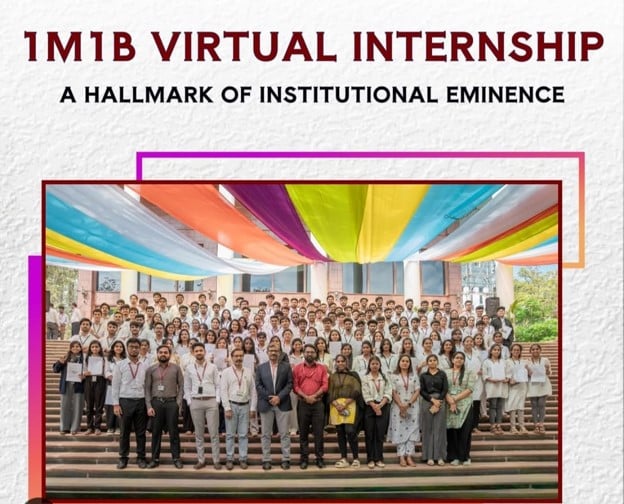
The Industry Internship Programme in the BCA programme with specializations in Data Science, Artificial Intelligence & Machine Learning, and Game Development is a vital component designed to provide students with hands-on industry exposure and real-world experience in professional environments.

Embedded within the academic structure and typically undertaken in the advanced stages of the programme, the internship enables students to apply theoretical knowledge to practical, industry-relevant challenges, effectively bridging the gap between classroom learning and workplace expectations.

Students gain opportunities to work with IT companies, analytics firms, AI startups, gaming studios, and technology-driven organizations, engaging in live projects and collaborative environments. Depending on their specialization, students contribute to areas such as data analysis, machine learning model development, software application development, automation, game design, graphics, and immersive technologies.

The programme emphasizes:
a) Application of technical knowledge in real-world scenarios
b) Development of professional, communication, and teamwork skills
c) Exposure to industry tools, standards, and best practices
d) Enhanced employability through experiential learning

Guided by faculty and industry mentors, students are evaluated based on their performance, project contributions, and professional conduct, ensuring a structured and outcome-driven experience.

The Industry Internship Programme plays a crucial role in preparing students to transition confidently into professional careers, entrepreneurship, and innovation-driven roles, making them industry-ready graduates in a competitive technology landscape.

STUDY ABROAD OPTIONS

International Mobility

Experience global education through our international study opportunities designed to broaden academic perspectives and cultural understanding. These programmes enable students to study at partner universities abroad, gain international exposure, and develop the global competencies needed to succeed in an interconnected world.

Learn More

An opportunity that lets students begin their degree at Alliance University (1 or 2 years) and then transfer to a foreign university to complete and earn their degree internationally.

Explore the World: Study a semester abroad, earn transferable credits, and gain global insights while experiencing a new culture and expanding your skills.

Alliance University welcomes students from across the world to study, collaborate, and thrive in a truly global learning ecosystem. We combine academic rigour with industry exposure, modern infrastructure with personalised support, and global perspectives with Indian values.

Learn More

Recognising Effort, Celebrating Success

Category Eligibility Criteria
General 10+2 from recognized Board / Council with minimum 50% marks.
Reserved Categories 5% relaxation for SC / ST candidates

Program duration
Entry Level Program Duration
Entry Level Four Years / Eight Semesters

ACCEPTED TEST SCORES
SAT
AUSAT
SAT
AUSAT
SAT
AUSAT
SAT
AUSAT

Particulars Indian Nationals Foreign Nationals
Registration Fee (Fee for Learners Value Proposition Course Virtual) ₹25,000 $500
First Installment ₹2,25,000 $2,925
Second Installment ₹2,50,000 $3,425
Third Installment ₹2,50,000 $3,425
Fourth Installment ₹2,50,000 $3,425
Total Program Fee (Includes registration + all installments) ₹10,00,000 $13,700


Category Eligibility Benefits
Academic Excellence Class X & XII ≥ 95% 50% Tuition Fee Waiver
AUSAT Freeship AUSAT ≥ 90% AND X & XII ≥ 60% ₹50,000 Freeship (One-Time)
AUSAT Freeship AUSAT 80–89.99% ₹25,000 Freeship (One-Time)
CUET Scholarship CUET ≥ 90% 30% Tuition Fee Scholarship
CUET Scholarship CUET 80–89.9% 20% Tuition Fee Scholarship
CUET Scholarship CUET 70–79.9% 15% Tuition Fee Scholarship
Category-Based Scholarships SC / ST ≥ 70% 20% Tuition Fee Waiver
Category-Based Scholarships Differently-Abled ≥ 50% 50% Tuition Fee Waiver
Category-Based Scholarships Defence & Paramilitary ≥ 70% 15% Tuition Fee Waiver
Category-Based Scholarships International-Level Player ≥ 50% 100% Tuition Fee Waiver
Category-Based Scholarships National-Level Player ≥ 50% 50% Tuition Fee Waiver
Category-Based Scholarships Domicile ≥ 70% 5% Tuition Fee Waiver


Learn more


Steps Description
Step 1 Submit Online Application
Step 2 Pay Application Fee — ₹1000 (US$50 for foreign nationals)
Step 3 Appear for AUSAT (Alliance University Scholastic Aptitude Test)
Step 4 Personal Interview
Step 5 Final Selection based on overall performance
Start your application now

Living Spaces That Inspire Belonging

EXPLORE OUR HOSTELS

Comfort, safety, and community form the foundation of campus living. Our residential halls are thoughtfully designed to create a sense of belonging—offering a welcoming environment where students can study, unwind, and build lifelong friendships.

Separate hostels
for boys and girls

Student-friendly
common areas

Spacious rooms
(single, double, or triple occupancy)

Dedicated wardens
and support teams

residential-image-update

Industrial Collaborations

Lorem Ipsum is simply dummy text of the printing and typesetting industry. Lorem Ipsum has been the industry’s standard dummy text ever since the 1500s, when an unknown printer took a galley of type and scrambled it to make a type specimen book. It has survived not only five centuries,

Real Stories, Real Impact

STUDENT
No testimonials found.

Everything You Need to Know

Is BCA good for game development?
Yes. The BCA programme at Alliance University provides a robust foundation in programming, software engineering, and application development, which is crucial for aspiring game developers. To excel in the gaming industry, this base is complemented with specialised training in game engines, graphics, animation, and interactive design. Together, these prepare students for the creative and technical demands of game development.
How does Game Development integrate with fields like AI, AR/VR, and Cloud Computing?
Modern game development increasingly integrates artificial intelligence, augmented and virtual reality, and cloud computing to deliver advanced experiences. This includes AI-driven characters within immersive VR environments hosted on cloud platforms, AR games that adapt dynamically to player behaviour through AI, and seamless multiplayer AR/VR experiences enabled by powerful cloud infrastructure.
What industries other than gaming hire Game Development professionals?
The skills acquired in game development, including coding, visualisation, animation and problem-solving, are highly transferable across diverse industries. Beyond the gaming sector, graduates find opportunities in education through interactive learning environments, in healthcare with simulation and therapy tools, in defence and military through training simulations, and in architecture and real estate with visual walkthroughs and 3D modelling. They also contribute to film and animation through visual effects, to marketing and advertising with gamified campaigns, and to finance and research by developing data visualisation and interactive tools. These varied applications highlight the versatility and long-term value of game development as a career pathway.
What is the future scope of Game Development in terms of innovation and jobs?
The future of game development is expansive and innovation-driven, extending beyond entertainment to influence technology, education, healthcare, and social platforms. Career opportunities include Game Programmer / Developer, Game Designer or Level Designer, 3D Artist / Animator, Sound Designer, LiveOps / Game Economy Analyst, VR/AR Developer.
Who is eligible to apply for the BCA (Honours) in Game Development programme at Alliance University?
Applicants must have completed 10+2 (or equivalent) from a recognised board, in any stream, with a minimum aggregate of 60% marks. This eligibility criterion ensures that students from diverse academic backgrounds can pursue careers in game development.
What core subjects are included in Alliance University’s BCA (Honours) in Game Development curriculum?
The curriculum combines computing fundamentals with specialised training in game development. Core areas include Programming Foundations (C++, C#, Java, Python), Data Structures & Algorithms, Game Development (2D and 3D), Graphics & Computer Animation, UI/UX Design for Games, VR / AR Applications, Game Engine Usage (Unity, Unreal Engine), Software Engineering and Capstone Game Projects.
What exciting career paths can I pursue after graduating from Alliance University’s BCA (Honours) in Game Development?
Graduates can pursue diverse roles in both gaming and allied industries, including Game Programmer / Developer, Game Designer, 3D Artist / Animator, UI/UX Designer for Games, Game Tester / QA Analyst, VR/AR Developer. The programme nurtures technical expertise and creativity, allowing graduates to make a mark in a competitive industry.
What is the duration and structure of the BCA (Honours) in Game Development programme at Alliance University?
The programme is a four-year, full-time undergraduate degree divided into eight semesters. It is structured to provide a progression from foundational courses to advanced electives and project-based learning, ensuring that students graduate with both theoretical depth and practical expertise.
Does Alliance University’s BCA (Honours) in Game Development offer internships or projects with leading gaming studios?
Yes. Alliance University integrates internships, live projects, and industry interactions into the programme through its Career Advancement and Networking (CAN) office and the Centre for Industry Interaction. While specific tie-ups with individual gaming studios are not detailed, students gain valuable exposure to real-world challenges that enhance employability and industry readiness.
What advanced tools are used in Alliance University’s BCA (Honours) in Game Development?
Students receive training in industry-standard tools and engines, such as Blender for 3D modelling and animation, Unity and Unreal Engine for immersive game development, Cocos2D for mobile and lightweight games. This ensures that graduates are technically proficient and industry-ready.
What state-of-the-art facilities support BCA (Honours) in Game Development students at Alliance University?
The University offers modern infrastructure and labs to enhance practical learning, including advanced Computing and Development Labs, access to specialised software and platforms, collaboration spaces and industry workshops, support from the Career Advancement and Networking cell. Together, these facilities create an ecosystem of innovation and skill-building.
How does Alliance University’s BCA (Honours) in Game Development address trending areas like multiplayer game development?
Although not explicitly detailed in the curriculum, the programme emphasises hands-on learning, exposure to emerging technologies, and industry-driven projects. These collectively prepare students to engage with complex areas such as multiplayer game development, cloud integration, and interactive systems.
How can I connect with Alliance University’s BCA (Honours) in Game Development alumni for career insights?
Students can connect with alumni through the Alliance Alumni Association portal, the CAN cell, LinkedIn networking, and curated alumni events. These channels create opportunities to seek guidance, understand industry trends, and build professional connections with graduates excelling in varied career paths.
What in-demand skills will I gain from Alliance University’s BCA (Honours) in Game Development?
Students graduate with technical mastery of engines like Unity and Unreal, proficiency in programming languages, expertise in design principles, and an understanding of AR/VR integration. These skills are highly sought after by employers in the gaming and technology sectors.
How does Alliance University’s placement cell help BCA (Honours) in Game Development graduates secure jobs in top firms like EA or Ubisoft?
The Career Advancement and Networking (CAN) cell equips students with industry-relevant skills, mentorship, and placement support. By fostering strong industry linkages and providing tailored training, it ensures that graduates are prepared to pursue careers in prestigious global gaming companies like EA, Ubisoft, and other leading studios.
What is the duration of the BCA (Honours) – Game Development program? +

The BCA (Honours) – Game Development program is a four-year undergraduate degree delivered across eight semesters.

Who is eligible to apply for the program? +

Students who have passed 10+2 with a minimum of 50% marks are eligible to apply. Selection is through AUSAT and Personal Interview.

Does the program include practical and project-based learning? +

Yes. Students engage in applied data analytics, machine learning, and real-world case-based projects along with a capstone project.

Are internships offered as part of the program? +

Yes. Students receive internship and industry-engagement opportunities with analytics, technology, and consulting organisations.

Are scholarships available? +

Yes. Students may apply for merit-based, AUSAT freeship, CUET-based, and category-based scholarships.

How do students apply for admission? +

Applicants submit an online application, appear for AUSAT, and complete a Personal Interview.

Does the program support innovation and research? +

Yes. Students are encouraged to work on data-driven innovation, analytics research projects, and industry-aligned solutions.

AU